As-Sayyid Al-Ajjal Shamsud-Deen ‘Umar: Promoter of Islam
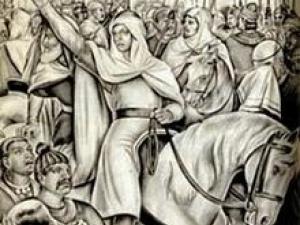
As-Sayyid Al-Ajjal Shamsud-Deen ‘Umar was a high-ranking Muslim official in China. He was a talented man who enjoyed great potentials and multiple capabilities. He held many official positions until he became the supreme commander of the Mongolian military forces of Sichuan [Szechwan or Szechuan].
Then, he was appointed the provincial governor of Sichuan in 671 AH/ 1372 AD. After two years, he was appointed as the first provincial governor of Yunnan. Given his abilities, talents and adequacy in ruling, the Islamic culture spread in the north-west of China. As-Sayyid Al-Ajjal ruled his people justly and his reign repelled racism; he did not differentiate between Muslims and non-Muslims.
The historian, Rasheedud-Deen Fadhl-ullaah, in his book Jaami‘ At-Tawaareekh stated that China during the rule of the Mongol Dynasty was divided into 12 provinces, each with its own governor. He also mentioned that eight of those governors were Muslims. This underlines the strength of Muslims in the era of the Yuan Dynasty, which ruled China for almost 90 years (770-1054 AH /1368 to 1644 AD). During their reign, the number of Muslims increased, until Islam became one of the major religions of China.



_0.jpg)



Comments
Send your comment