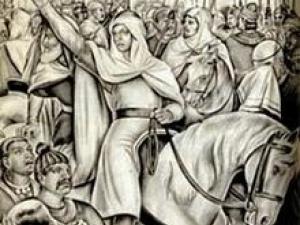
‘Amr ibn Al-‘Aas, May Allaah Be Pleased with him, built the first mosque in Egypt in 21 AH at Al-Fustaat. The mosque symbolized the emergence of Islam in Egypt and the dominance of the Islamic state over the country. ‘Amr ibn Al-‘Aas Mosque was known during the times of its prosperity as “the Crown of Mosques”, and was known later on as “the Ancient Mosque”.
It is located north of the fortress of Babylon. It has become a shining beacon of knowledge and culture, relating the history of the Islamic state in Egypt throughout the ages until this very day.
During the reign of Caliph ‘Uthmaan ibn ‘Affaan, May Allaah Be Pleased with him, (23-35 AH / 643-655 AD), the Muslims began to build a fleet in order to repel any potential naval attack and in order to launch Jihaad against the Byzantines.
The task of establishing the Muslim fleet was assigned to experts in Egypt and As-Shaam. However, the Egyptians played the greater role in establishing the Muslim fleet. By the year 33 AH / 654 AD, the Muslims had a huge fleet, with which they managed to scatter the sovereignty of the Byzantine Empire in the Mediterranean Sea and conquer some of its islands.



.jpg)



Comments
Send your comment