


Previous Article:
5 facts about the Colosseum
The Flavian Amphitheatre, better known as the Colosseum, is both a marvel of architecture and engineering, as well as a powerful symbol of Ancient Rome’s might and brutality.

Following the battle of Marston Moor in July 1644, the parliamentarian Earl of Manchester, declared: “It was easy to begin the war, but no man knew where it would end.” It was a statement that was to prove uncannily accurate, as parliament and the king went head to head in a series of bloody battles and rebellions that engulfed the kingdoms of England, Scotland and Ireland between 1638 and 1651.
Many historians divide the events that occurred in England during this period into three separate conflicts: the First Civil War (1642–46); the Second Civil War (1648–49); and the Third Civil War (1649–51). Other historians, such as John Morrill, see the English Civil Wars in a wider context. They view the period between 1638 and 1651 as a war of three kingdoms, with events in all three territories leading to the outbreak of civil war in England in 1642.
Morrill comments: “The stresses and strains in 17th-century England were not alone sufficient to generate civil war. There could not have been a war without the collapse of royal power in Scotland in the late 1630s following Charles’s failure to exert royal authority over the Scottish church, or without the king’s difficulties in raising an army to deal with the Catholic massacre of Protestants in Ireland in 1641. England was a diesel-engined state that was not capable of spontaneous combustion – all the wars were wars within and between each of the kingdoms of Scotland, England and Ireland.”
Charles I came to the throne in 1625 with a firm belief in his divine right to rule, a desire to unite the kingdoms of England, Scotland and Ireland, and little respect for the role of parliament. His decision to dissolve parliament in 1629 merely strengthened many people’s belief that he sought an absolutist monarchy. Charles’s decision to marry the French and, more importantly, Catholic princess Henrietta Maria did little for his popularity in a Protestant England that feared Catholicism.
It was during the 1630s that Charles flexed his monarchical muscles in Scotland by imposing a new English-inspired book of common prayer on the Scottish church and then mobilising thousands of men from all three kingdoms to overcome Scottish resistance. Their armed response forced Charles to call parliament for the first time in 11 years to request funds, a move that ultimately ended with the impeachment and execution of his closest advisor and friend, the Earl of Strafford, and the imprisonment of Archbishop Laud, the much-hated figure believed to be behind the new religious reforms.
By 1641, the kingdom of Ireland had also erupted into extreme violence and word soon reached England of atrocities being carried out against English settlers at the hands of Irish Catholics. As a result, fears of popish plots reached new heights and many believed that Charles himself was involved in the rebellion.
Outraged by the demands placed on him by parliament and their refusal to grant him money to quell the Irish unrest – many feared Charles would use the money to raise an Irish army against England – the king made the unprecedented, and unsuccessful, move to storm Westminster and arrest five key members of parliament for high treason on 4 January 1642. This prompted the people of London to turn on their king for what they saw as the actions of a tyrant, and Charles was forced to flee the capital for York and later Nottingham where he raised his standard and declared war on parliament in August 1642. The scene was set for the First English Civil War between crown and parliament, and Oxford was declared the royalist capital the following month.
The first blood was shed during minor skirmishes across the country, but the opening major battle took place at Edgehill in Warwickshire in October 1642 after the king and 14,000 men left Nottingham to reclaim London. The much smaller parliamentary army under the command of the Earl of Essex rushed to block the royalist advance and around 1,500 lives were lost in what was ultimately a stalemate. Essex withdrew to Warwick while the king remained encamped near the battlefield.
Other significant early clashes included the two battles of Newbury and the royalist victory at Roundway Down in July 1643, which cleared the way to the west for the king’s supporters and laid the groundwork for Prince Rupert, Charles’s hot-blooded nephew, to successfully storm Bristol the same month.
If Rupert and the royalists enjoyed some early success, the tide turned with their crushing defeat at the hands of parliament’s forces at Marston Moor (July 1644). Yet, for many historians, the real turning point arrived with the parliamentarian creation of the New Model Army in early 1645. The concept of a professional, full-time fighting force was first proposed after mutinous soldiers and deserters handed parliament defeat at Cropredy Bridge in June 1644. It was then decided that a national army made up of men with no regional affiliations was required, and a force of 22,000 men was proposed, pledging loyalty and discipline in return for regular pay.
Men were promoted on merit rather than social standing, and soon the New Model Army was proving its worth, fighting and winning its first major battle at Naseby in June 1645.
Such an army needed a strong leader, and in 1645, a devout Puritan and military commander named Oliver Cromwell was appointed second in command of the New Model Army, and then lord general of all parliamentary forces in 1650. Cromwell was a driving force in the trial and execution of the king in January 1649, an event that many historians believe triggered the Third English Civil War, which continued until its final major battle at Worcester in September 1651.
Cromwell was named lord protector in 1653, but he wasn’t in the ascendancy for long. In 1661, after the restoration of Charles II to the throne, Cromwell’s body was exhumed and hanged; his head mounted on a pole above Westminster Hall.
Source:
http://www.historyextra.com/feature/wars-blood
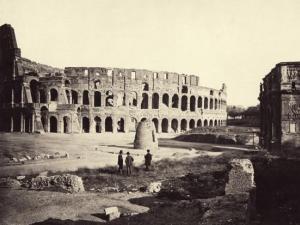
The Flavian Amphitheatre, better known as the Colosseum, is both a marvel of architecture and engineering, as well as a powerful symbol of Ancient Rome’s might and brutality.

The notoriety of this prince travelled far and wide until a well known shaikh in far away Shiraz in ancient Persia heard . “I must reform this prince before he squanders all his wealth on pomp and pleasure”, said the Shaikh to his followers. “I will travel to Samarqand and speak to him personally”. So saying, the Shaikh set off on foot for Samarqand with two of his companions.

To receive the latest topics on email directly as they are published

Comments
Send your comment