


Previous Article:
5 facts about the Colosseum
The Flavian Amphitheatre, better known as the Colosseum, is both a marvel of architecture and engineering, as well as a powerful symbol of Ancient Rome’s might and brutality.

From the 1500s through the 1800s, European nations were engaged in a tragic and barbaric practice known as the "slave trade". During this period, over 12 million Africans were boarded onto ships and taken to North and South America to work as slaves. The legacy of this inhumane treatment lives on today, in the form of racism and economic disadvantage for blacks in the Americas, and disunity and war in Africa.
One aspect of slavery that has been overlooked in historical studies is the impact of slave revolts. Needless to say, the African slaves did not go willingly to their new lives. In many cases, they fought back against their masters, refusing to accept the life they’d been thrown into.
One of the most notable (and successful) of these rebellions was the Bahia Revolt, which took place in 1835 in Brazil. This revolt, unlike some others, was planned and led entirely by Muslims. The story of how they were able to plan a revolt in such horrid conditions and have such a large impact is remarkable. The most interesting and defining factor of the revolt was its Islamic character.
Brazil was originally a Portuguese colony, up until 1822 when it gained its independence. Regardless of the government, however, the slave trade went on from the earliest Portuguese settlements through the late 1800s. In the eastern state of Bahia, slaves made up about one third of the labor force.
Understanding the origin of these slaves is very important to understanding how the revolt was so successful. Most of the slaves came either from Senegambia (on the western coast of Africa), or from the Bight of Benin (modern-day Benin, Togo, and Nigeria).
The slaves from these areas were almost entirely Muslim. The Wolof and Mandinke people of Senegambia were entirely Muslim by the 1400s and were very learned in Islamic matters, with many scholars among them. The Yoruba, Nupe, and Hausa people from Benin were also entirely Muslim since at least the 1500s.
When these Muslim slaves arrived in Brazil, they carried with them their religious beliefs, with most refusing to submit to Catholicism like their Portuguese and Brazilian masters. Even as slaves they managed to carry on an Islamic community with imams (scholars), mosques, schools, and communal prayer. In the capital of Bahia, Salvador, where the revolt would take place, over 20 different mosques existed, being built by both Muslim slaves, and freedmen (former slaves who had gained freedom).
In 1814 and 1816, the Muslims of Bahia attempted to organize a revolt against the Portuguese. They wanted to overthrow the local law enforcement, free all the slaves, and commandeer ships back to Africa. Unfortunately, some slaves were serving as informants to the local police, and the revolt was crushed before it even started, with its leaders being killed. Over the next 20 years, intermittent minor revolts by Muslims and non-Muslims alike were met with no success in bringing freedom to Bahia’s slaves.
Before discussing the revolt in 1835, we must understand the unifying factor Islam played in the organization of the slaves. The Wolof, Mandinke, Hausa, Nupe, and Yoruba all spoke different languages. While some people have ignorant ideas about Africa being one monolithic entity, it is a diverse continent of different people, cultures, and nations.
These Muslim slaves in Bahia were as diverse as a group of French, German, Russian, and Greek speakers. Despite their ethnic differences, the unifying factor between all of them was Islam. Islam provided them with a common language to speak (Arabic), common customs, dietary habits, and behaviors.
The Muslims of Bahia would be much more connected to fellow Muslims of a different ethnicity than non-Muslims who spoke the same language as them. Throughout Islamic history, unity such as this has led to greater strength and solidarity.
The failed revolts of 1814 and 1816 forced Bahia’s Muslims to go into hiding. Outward expressions of Islam were repressed by the authorities. Despite this, throughout the 1820s and 1830s, the Muslim leaders and scholars focused greatly on converting other Africans (be they Catholic or animist) to Islam. Even the Brazilian authorities noticed an increase in the number of people practicing Islam, but did not pay it much attention.
The people who organized the revolt were exclusively Muslim scholars. Due to the strength of the Muslim community, they were well respected by the people and held in a position of honor and esteem. Among these leaders were men such as:
Shaykh Dandara – a wealthy freedman who was an imam
Shaykh Sanim – an elderly slave who established a school to teach people about Islam
Malam Bubakar Ahuna – the leading scholar throughout Bahia, who organized Muslim community events
These Muslim scholars, as well as many others, used the mosques as a base of operations. There they discussed plans for revolt, stored weapons, and educated the local Africans. It was through these mosques that Malam Bubakar distributed his call to jihaad (holy struggle, or military resistance). He wrote out a document in Arabic that called on Muslims to unify in preparation for the coming revolt against their Brazilian masters.
To be continued.......
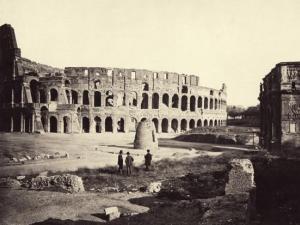
The Flavian Amphitheatre, better known as the Colosseum, is both a marvel of architecture and engineering, as well as a powerful symbol of Ancient Rome’s might and brutality.

The notoriety of this prince travelled far and wide until a well known shaikh in far away Shiraz in ancient Persia heard . “I must reform this prince before he squanders all his wealth on pomp and pleasure”, said the Shaikh to his followers. “I will travel to Samarqand and speak to him personally”. So saying, the Shaikh set off on foot for Samarqand with two of his companions.

To receive the latest topics on email directly as they are published

Comments
Send your comment