


Previous Article:
5 facts about the Colosseum
The Flavian Amphitheatre, better known as the Colosseum, is both a marvel of architecture and engineering, as well as a powerful symbol of Ancient Rome’s might and brutality.

This early period of ‘taking of the land’ is described in the Landnámabók, a 13th-century compilation of earlier sources, which details the names, ancestry and notable deeds of the first settlers in each district.
Once this initial phase of settlement was over, territorial disputes inevitably erupted. The danger of uncontrollable feuds prompted the settlers to formalise what had, until then, been a somewhat haphazard political system – and so, in AD 930, they established the Althing: the first pan-Icelandic assembly.
The Althing has a good claim to being the world’s oldest parliament. It was modelled on smaller meetings held in Scandinavia, where all free men had a right of hearing.
The settlers chose a suitably spectacular setting for this assembly – a site on the Öxará river in the south-west of the island, fringed by a volcanic cleft. The location was as accessible as it was spectacular, and gooar and their thingmenn journeyed there from across the island when the assembly convened in mid-June each year.
At the Althing, the chieftains gathered with their retinues, serving as lawmakers – reviewing existing laws and making new ones – and as judges, presiding over cases that could not be decided in local courts.
The gathering was overseen by the lögrétta, the legislative council led by a lögsögumaoror lawspeaker who recited one-third of the Commonwealth’s laws from a great rock at the centre of the assembly site each year. It was a very public form of parliament and judiciary.
The requirement for all the gooar to attend meant that, though feuds – often bloody – did arise, the Althing acted as a safety valve, a neutral arena where settlements could be negotiated before conflict got out of hand.
By the 12th century, Icelandic society had begun to change, swayed by external nfluences – most notably Christianity. Missionaries had earlier attempted to preach in Iceland, though with little success until a concerted effort by the Norwegian king Olaf Tryggvason led Thorgeir Thorkelsson, the lawspeaker of the Althing, to declare in AD 1000 that Iceland should be Christian.
As money and land was bequeathed to the church, much of it came under the control of local landowners, and the go␣ar grew in wealth, consolidating their power. A number of chieftaincies fell into the hands of just a few families or even single individuals so, by about 1220, political power had become the exclusive preserve of just six families.
The remaining gooar ruled over what were effectively mini-kingdoms and, as the rewards of power grew, so did the violence the gooar employed to preserve and enlarge their territories. From the late 12th century, Iceland was riven by civil wars, characterised by large- scale pitched battles quite unlike earlier feuds.
Loose alliances coalesced around two powerful families, the Oddi and the Sturlungar. The latter had close ties with the royal family of Norway, whose authority had grown far stronger in the previous three centuries and now had the resources to meddle in the Icelandic civil wars.
The long reign of King Hákon Hákonarson (1217–63) saw the Norwegians gradually increase their influence in Iceland as the Sturlungar and Oddi tore the Commonwealth apart. Among the casualties of the conflict was the great Icelandic poet and historian Snorri Sturluson, murdered in 1241 on the orders of King Hákon, reputedly for his part in a conspiracy to depose him.
Battle-weary, despairing and seeing in continued independence only continued bloodshed, the Icelandic chieftains pledged their allegiance to the Norwegian king at theAlthing in 1262. It was an ignominious end to the Icelandic Commonwealth, and brought to a close the experiment of rule without kings.
So it happened that, four centuries after their ancestors had fled Norway to escape the oppression of Harald Finehair, the Icelanders found themselves firmly under the thumb of his royal descendants.
stay tuned...................
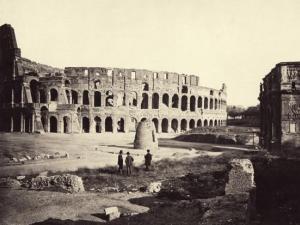
The Flavian Amphitheatre, better known as the Colosseum, is both a marvel of architecture and engineering, as well as a powerful symbol of Ancient Rome’s might and brutality.

The notoriety of this prince travelled far and wide until a well known shaikh in far away Shiraz in ancient Persia heard . “I must reform this prince before he squanders all his wealth on pomp and pleasure”, said the Shaikh to his followers. “I will travel to Samarqand and speak to him personally”. So saying, the Shaikh set off on foot for Samarqand with two of his companions.

To receive the latest topics on email directly as they are published

Comments
Send your comment