


Previous Article:
5 facts about the Colosseum
The Flavian Amphitheatre, better known as the Colosseum, is both a marvel of architecture and engineering, as well as a powerful symbol of Ancient Rome’s might and brutality.

Both the European Community and President Putin are making plays for Ukraine’s favours. Chris Bowlby looks at the republic’s varied history to explore its present dilemma
Anti-government demonstrations in Kiev’s Independence Square have been persistent since last November, prompting violent responses from riot police armed with truncheons and tear gas. Demonstrators have denounced what they see as the corruption and incompetence of the regime led by president Viktor Yanukovych. But this is much more than an internal Ukrainian affair.
The contest on the streets of Kiev is also a battle for influence between Russia and the European Union, both promising Ukrainians new forms of economic assistance and political association. Ukraine – which only achieved independence as the Soviet Union collapsed in 1991 – is often portrayed as poised between Europe’s east and west.
Simple geography illustrates Ukraine’s pivotal position. As Europe’s second largest country, its territory reaches deep into that of modern Russia, but it shares borders too with several EU members, including Poland and Hungary. For historians, however, this tension is more subtle than simple ideas of east-west division, and concerns a lot more than, say, trade deals.
President Putin made headlines in December with his agreement to cut by a third what Russia charges Ukraine for gas. But Russia’s – and Putin’s – sense of linkage to its geographical neighbour runs far deeper. Geoffrey Hosking, one of the UK’s leading historians of Russia and its influence, points out that “the origins of both states lie in Kiev, and in the medieval state known as Kievan Rus”. This means that Russians “think of the two countries as being very closely related. It’s like England and Scotland.”
Putin sought to dramatise these deeper links last July when he visited Ukraine to join celebrations commemorating the conversion of Prince Vladimir of Kiev to Christianity in 988, a key moment in the history of the Russian Orthodox Church. Putin spoke of the “spiritual unity” of the Ukrainian and Russian peoples: “in this sense,” he said, “we are, without a doubt, one people”. Dr Andrew Wilson, Reader in Ukrainian Studies at University College London, points out that this version of history is reinforced in Russian school textbooks and mass media.
But it’s important, argues Dr Wilson, to see Ukraine – both its territory and its identity – as more of a “shifting jigsaw” than a single coherent unit. While some parts retain genuinely close links with Russia, other parts still reflect in their voting patterns today that they were once under, say, Polish rule.
In the early modern period, Kiev and the lands around it were ruled as part of the Polish-Lithuanian Commonwealth, making them open to influences such as the Renaissance and the Counter-Reformation. And Galicia in western Ukraine was ruled for a long period as part of the Habsburg empire. “You get a very strong current of Habsburg nostalgia there,” notes Wilson, symbolised by the revival of coffee shops in cities like L’viv (formerly Lemberg). “You can make the argument that this is a lost part of central Europe.”
This western part of Ukraine, adds Professor Hosking, has “had a completely different history”. Many of its people are not Russian Orthodox but belong to the Uniate church – the Greek Catholic church as it is often known – that conducts its rite in Ukrainian and acknowledges the pope as its spiritual head. Another part of today’s Ukraine with a very different past is Crimea, with its Greek and Tartar links, plus periods under both Ottoman and Russian rule.
Stay tuned....................
Source:
http://www.historyextra.com/feature/history-ukraine-territory-geography-crisis
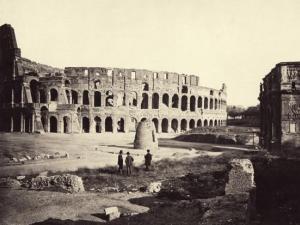
The Flavian Amphitheatre, better known as the Colosseum, is both a marvel of architecture and engineering, as well as a powerful symbol of Ancient Rome’s might and brutality.

The notoriety of this prince travelled far and wide until a well known shaikh in far away Shiraz in ancient Persia heard . “I must reform this prince before he squanders all his wealth on pomp and pleasure”, said the Shaikh to his followers. “I will travel to Samarqand and speak to him personally”. So saying, the Shaikh set off on foot for Samarqand with two of his companions.

To receive the latest topics on email directly as they are published

Comments
Send your comment