


Previous Article:
5 facts about the Colosseum
The Flavian Amphitheatre, better known as the Colosseum, is both a marvel of architecture and engineering, as well as a powerful symbol of Ancient Rome’s might and brutality.

Charles II is, in my view, the wittiest monarch in English history. He was courageous, tolerant, lazy, duplicitous and pleasure-loving: his return from exile in 1660 inaugurated the most conspicuous change in manners – from extreme puritanism to unbridled licentiousness – this country has seen. But he conducted the restoration of the Stuart dynasty with such tact, and rode every later crisis with such skill, that he was never in serious danger of being unseated.
His father, Charles I, was executed after refusing to reach a compromise with his opponents. The same fault led to the downfall of Charles II’s successor – his younger brother, James II and VII, who was in 1688 chased out of England for attempting to impose his personal, Roman Catholic, preferences.
James on one occasion warned Charles II not to go for a walk without guards, to which Charles replied, with characteristic humour: “You may depend upon it that nobody will ever think of killing me to make you king.”
William III is one of the greatest kings of England and yet one of the least remembered. No one could have been more skilful at deposing James II, or at negotiating the terms for a monarchy more acceptable to parliament. But even in his lifetime, this bold, cold, asthmatic Dutchman was not popular. Only by Loyalists in Northern Ireland is King Billy remembered as a hero; the victor of the battle of the Boyne (fought in 1690 between the Catholic James II and the Protestant William III who, with his wife, Mary II, had overthrown James in England in 1688).
William had timed to perfection his arrival in England in 1688, landing in Devon with a printing press as well as an army. His grasp of the need to present himself as a reasonable king for a reasonable people was as strong as James II’s was defective. But for him, the Glorious Revolution, as the constitutional settlement reached in 1688–89 came to be known, might not have been very glorious at all.
Queen Victoria reigned for longer than any of her predecessors. She rescued the monarchy from the contempt in which it was held for several decades before 1837, and became the grand unifying figure, at once majestic and domestic, in a Britain that dominated the globe.
Here was an empress who had a startling affinity with the middle class: the class to which even the aristocracy felt it must now defer. Her views about politics, and especially about foreign affairs, were so strong, and expressed with such partisan sincerity, that it was impossible to kick her upstairs, to the less exciting region above politics that her successors came to occupy.
Her personality was of “irresistible potency”, as her greatest biographer, Lytton Strachey, put it. But though Victoria was passionate, she possessed also a devout desire for self-improvement, fully shared by her husband, Prince Albert, who was from Coburg.His early death on 14 December 1861 led her to retire for many years from public life.
Benjamin Disraeli, the most theatrical of Victoria’s prime ministers, lured her out of this mournful seclusion in 1868. Victoria proceeded to rout incipient republicanism by establishing an emotional link with her subjects that no anti-monarchist could rival.
During the reign of George V, an alarming number of royal families, including the Romanovs, the Hohenzollerns and the Hapsburgs, were overthrown. George helped to avert that fate by welcoming the Labour party into power.
In January 1924 the first, short-lived Labour government was formed. Its members proved as anxious to demonstrate respectability as George was to confer it. He wondered what his grandmother, Queen Victoria, would have thought, but was himself favourably impressed: “I must say they all seem to be very intelligent and they take things very seriously. They have different ideas to ours as they are all socialists, but they ought to be given a chance and ought to be treated fairly.”
Here was the king as the upholder of the national idea of fair play. Like a cricket umpire, he could be depended upon to remain impartial. He also became, through his Christmas broadcasts, extremely popular.
George V set a pattern of conscientious monarchy that his eldest son, Edward VIII, felt unable to uphold – hence the abdication of 1936. But George’s second son, who at the end of that year became George VI, was just as determined to be a dutiful monarch.
So too was George VI’s elder daughter, who upon his death in 1952 became Elizabeth II. She had learned from her father and grandfather how a constitutional monarch should behave, which is one reason why even leftwing Labour politicians show no real desire to overthrow her.
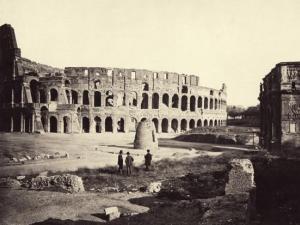
The Flavian Amphitheatre, better known as the Colosseum, is both a marvel of architecture and engineering, as well as a powerful symbol of Ancient Rome’s might and brutality.

The notoriety of this prince travelled far and wide until a well known shaikh in far away Shiraz in ancient Persia heard . “I must reform this prince before he squanders all his wealth on pomp and pleasure”, said the Shaikh to his followers. “I will travel to Samarqand and speak to him personally”. So saying, the Shaikh set off on foot for Samarqand with two of his companions.

To receive the latest topics on email directly as they are published

Comments
Send your comment