


Previous Article:
5 facts about the Colosseum
The Flavian Amphitheatre, better known as the Colosseum, is both a marvel of architecture and engineering, as well as a powerful symbol of Ancient Rome’s might and brutality.

The dynasty that gaveus the Forbidden City and Great Wall (1368–1644)
The Forbidden City, the Great Wall, fabulous ceramics: the Ming is how we see historic China. The Ming came out of the shock of Mongol occupation and the civil wars of the 1350s. The founder, Zhu Yuanzhang, was born a peasant, lived as a penniless beggar and wandering monk, but became one of China’s greatest rulers.
It’s a tale of three cities: first Zhu’s splendid capital, Nanjing; then Beijing, the new capital of the usurper Yongle who built the Forbidden City. Yongle wanted to show China to the world and sent the admiral Zheng He to east Africa and the Persian Gulf in giant ships (we filmed the construction of a spectacular full-sized replica in Nanjing).
The third city is Suzhou, the Chinese counterpart to Renaissance Florence, where a rising urban middle class demanded fashion, gardens, theatre and novels. To coin a phrase, if you were tired of Suzhou you were tired of life! But in 1644 the declining and over centralised Ming state fell to the Manchus, China’s last dynasty.
From world’s greatest empire to “crazy old man of war” (1644–1911)
The Qing dynasty is often seen as a time of decline, but in many ways the 18th century was a brilliant epoch. After the horrors of their conquest, the Manchus restored order, setting out to be more Chinese than the Chinese. Three great emperors reigned between 1661 and 1820; and the first, Kangxi, was one of the greatest in Chinese history. The Qing took control of Xinjiang, Mongolia and Tibet, doubling the size of the empire.
China then was still the greatest and most populous empire on Earth, and by far the biggest market. New wave Qing historians talk now of a diversified economy, and even aspects of what we might call civil society: guilds, cultural clubs, banks, charities, newspapers, even ‘public opinion’ – all features of Enlightenment states in Europe. It was a time of great cultural projects.
Far from the capital, the city of Yangzhou was a centre of printing, painting, novels and theatre; there Kangxi sponsored the printing of the Complete Tang poems (over 48,000 of them!) And then there’s the ‘novel of the millennium’, The Dream of the Red Chamber, an 18th‑century family saga – magical realism long before Marquez or Rushdie. One autumn day in a bar by Beijing’s North Lake a young electro musician with henna’d hair spoke of China’s best-loved book with a smile: “It’s really about the eternal verities: love – and freedom!”
Into this world in 1793 came the British. Ambassador Macartney summed up his hosts with breezy self-assurance and a nautical metaphor: “The Chinese empire,” he said was “a crazy old man of war… which may drift for a while yet, but can never be rebuilt on the same bottom.” China was about to be overtaken.
Jaw-dropping cruelty and success (1911–2015)
In the mid-19th century, China was shaken by a cataclysmic war, the Taiping Rebellion, in which 20 million died. We followed the story into the villages of Thistle Mountain in Guangxi where it all began. The Qing won, but at a price. The imperial system was now in crisis. New ideas flooded in, from naval technology and railways to democracy, feminism and socialism.
Terminally rocked by the Boxer rising (partly motivated by opposition to foreign interference), the empire fell in 1911 and China became a republic. It was on the winning side in the First World War, but the gross injustice of Versailles sparked new upheavals. Was the way forward western or Chinese? A reformed Confucianism, liberal democracy, or Marxist-Leninism?
That the communists won out was really an accident of history: it was the Japanese invasion that turned them into a liberation movement. But the stark truth is that all the 20th century’s Marxist-Leninist states were tyrannies, and Mao’s regime was no exception.
Recently historians have exposed the disasters of Maoism, especially the Great Famine in which tens of millions died, the largest man-made catastrophe in Chinese history. Yet the party held on to power, and though moves to political reform were put on hold after 1989, its economic achievements since have been jaw-dropping.
Modern China faces great challenges – not just economic, but social and political: the rule of law; the representation of the people; the safety of the food chain; the despoiled environment. But the Chinese have been through many ups and downs, and possess incredibly rich resources in culture and civilisation going back millennia. And as always, in the end, the Mandate of Heaven is theirs to bestow.
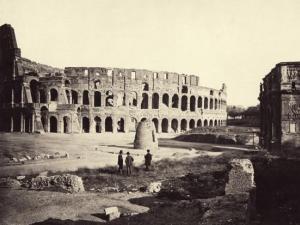
The Flavian Amphitheatre, better known as the Colosseum, is both a marvel of architecture and engineering, as well as a powerful symbol of Ancient Rome’s might and brutality.

The notoriety of this prince travelled far and wide until a well known shaikh in far away Shiraz in ancient Persia heard . “I must reform this prince before he squanders all his wealth on pomp and pleasure”, said the Shaikh to his followers. “I will travel to Samarqand and speak to him personally”. So saying, the Shaikh set off on foot for Samarqand with two of his companions.
To receive the latest topics on email directly as they are published

Comments
Send your comment