


Previous Article:
5 facts about the Colosseum
The Flavian Amphitheatre, better known as the Colosseum, is both a marvel of architecture and engineering, as well as a powerful symbol of Ancient Rome’s might and brutality.

1) The rise of the Middle Land
A Qin strongman unites China’s warring states (c3000–221 BC)
The Chinese call their country Zhongguo, the Middle Land. Originally that meant the Yellow river plain, and our journey – filming my forthcoming series on Chinese history – began there at a Henan temple fair with a million people celebrating Nu Wa, the prehistoric mother goddess who made the Chinese people out of the yellow mud. “We are all brothers and sisters,” one pilgrim told us, echoing DNA discoveries that claim that over a third of all Han Chinese males share just three ancestors only 5,000 years ago (if so, they really are the world’s biggest tribe!)
We also visited the great archaeological discoveries at Erlitou and Anyang, capital of the first great dynasty, the Shang (c1575–1046 BC) with whom many of the great themes of Chinese culture emerge – along with the script still used today. In 1046 BC, the Shang fell to the Zhou, who laid down the idea of the Mandate of Heaven, a conception of moral rulership codified by Confucius in the sixth century BC. But China was still divided into many small states – it could have ended up like Europe but for the ruthless Qin emperor Qin Shi Huang, who in 221 BC created China’s first centralised bureaucratic state by force. That tension between the humanistic and the autocratic is one of the burdens of China’s history.
So our big themes emerge: writing and ritual as sources of power; the Mandate of Heaven; and the importance of family and reverence for ancestors, seen in a moving scene with the Ching family of Wuxi on Tomb Sweeping Day, a festival in which millions offer prayers to their forebears. “Our family goes back a thousand years,” said one old man, “and huge changes have happened to us. Now everybody is asking: what are our roots?” Today everyone in China is asking the same question.
When China opened its arms to the world (AD 618-907)
Ask Chinese people their favourite period and most will say the Tang: an age of political, cultural and commercial greatness, when China went out to the world along the Silk Roads. It also welcomed foreigners, and their ideas and religions – including Christianity. (Just imagine a Daoist mission being received in Dark Age Winchester!)
To really open up to another civilisation requires humility, curiosity and breadth of spirit, and the Chinese had that confidence in the Tang. Another great theme is a new reflective spirit in literature. This was the time of China’s best-loved poets, as we saw in a school near Luoyang when effervescent kids took us through a poem by the eighth-century writer Du Fu about the tragedies of his time.
A golden age of restaurants, football, printing and the Chinese Leonardo (960–1279)
If I could go back to one time and place it would be the world depicted on the great Kaifeng Qingming Scroll from the 1120s. Don’t think of Chinese history as immemorial stability. The opposite is true: it is cycles of destruction and creation. After the fall of the Tang, China fragmented into 16 dynasties in five decades before the glories of the Song.
Song Kaifeng was perhaps the greatest city in the world before the 19th century. It’s not on the main tourist routes but it’s been one of my favourite places since I first went in the 80s. In the alleys are Daoist and Buddhist temples, Christian churches, and women-only mosques; not to mention the last Chinese Jewish community. It had the world’s first great restaurant culture (we shot a Chinese baking competition there with a Song cookbook). They even had football, with clubs, rulebooks, fans – and music.
Long before the Renaissance in the west they had printing, paper money, coke smelting, gunpowder, the magnetic compass, water-driven spinning machines, the endless chain drive mechanism, and the famous astronomical clock built by Su Sung, the Chinese Leonardo.
That’s what makes the Song so exciting, from their debates about good governance to their ideas about the good life, and from their arts to their staggering advances in science.
So why didn’t China become the first modern civilisation, before the west? Foreign invasion played a big part. The fall of Kaifeng to northern barbarians in 1127 was a huge blow. Then the Mongols overthrew the Southern Song in the 1270s, at around the time when Marco Polo described the wonders of Hangzhou. The experience of defeat would haunt them.
stay tuned.............................
source:
http://www.historyextra.com/article/premium/six-ages-china
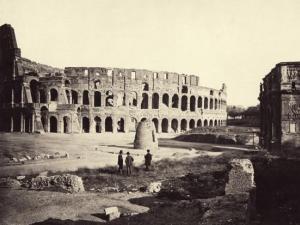
The Flavian Amphitheatre, better known as the Colosseum, is both a marvel of architecture and engineering, as well as a powerful symbol of Ancient Rome’s might and brutality.

The notoriety of this prince travelled far and wide until a well known shaikh in far away Shiraz in ancient Persia heard . “I must reform this prince before he squanders all his wealth on pomp and pleasure”, said the Shaikh to his followers. “I will travel to Samarqand and speak to him personally”. So saying, the Shaikh set off on foot for Samarqand with two of his companions.

To receive the latest topics on email directly as they are published

Comments
Send your comment