


Previous Article:
5 facts about the Colosseum
The Flavian Amphitheatre, better known as the Colosseum, is both a marvel of architecture and engineering, as well as a powerful symbol of Ancient Rome’s might and brutality.

In his new book, David Morris, curator of aircraft at the National Museum of the Royal Navy, charts the 100-year history of Royal Navy search and rescue (SAR). He reveals how since the First World War aircraft of the Royal Naval Air Service and later the Fleet Air Arm have operated from land bases and ships at sea, flying vital search and rescue missions.
Here, writing for History Extra, Morris explores the most notable events in the history of Royal Navy search and rescue…
The first documented reference to an aircraft attending an emergency situation would appear to be on 14 August 1911. During an air pageant outside of Chicago on the banks of Lake Michigan, pioneer aviator Hugh Armstrong Robinson was flying his Curtiss Hydroaeroplane (float plane) as part of the display when he noticed that a fellow pilot, Rene Simon, had force landed his own aeroplane onto the lake, some distance from the shore line.
Uncertain if his friend was injured or even still alive, Robinson altered course immediately and flew out toward the scene of the incident. Because Robinson’s aircraft being fully equipped to land on water, he made a safe landing and taxied alongside Simon’s crashed aircraft.
Thankfully Simon was uninjured, and Robinson was able to remain on station with him until a motorboat arrived to recover Simon from the water and tow the pilot and his stricken aircraft back to shore.
Though it was more assistance than a complete airborne rescue, this very early use of an aircraft for emergency support certainly highlighted the potential of aircraft for such a response. The event was all the more remarkable given that it took place only eight years after the Wright Brothers made the first powered and controlled flight.
The First World War saw the development of the aircraft accelerate immensely, with many notable events and firsts being achieved. Among these was the first true record of a person being rescued by an aircraft from a desperate and life-threatening situation.
On 19 November 1915, Royal Navy pilot Richard Bell-Davies was operating in command of No 3 Squadron RNAS, engaged in light bombing missions on Bulgarian targets, close to the Ottoman-controlled European border.
The target this particular day was a small railway junction at Ferijik (now Feres) some 25 miles east of Dedeagach (now Alexandroupoli). During the bombing run, Bell-Davies noticed his fellow airman flight sub-lieutenant Smylie’s aircraft had been hit by ground fire, and was forced to make a crash landing near to the target and behind enemy lines.
Knowing that Smylie was in grave danger, Bell-Davies swooped down and made a one-chance landing on the uneven scrubland near to Smylie’s crashed aircraft. As the Bulgarian troops raced toward the two airmen, Smylie crammed himself into Bell-Davies tiny Nieuport 12 biplane.
Under normal circumstances this would have been a reasonably easy task, but only a few days earlier, Bell-Davies’s aircraft had been converted from a two seat to a single seat model. This meant that the only access to the (previous) forward seating space was now by squeezing head first through a small space under the cockpit control panel, past Bell-Davies’s legs, the control column and ruder pedals and into the tiny remaining space. There were only seconds to spare as the closing troops began to take aim and fire their rifles at the two grounded airmen.
With no sure, clear take-off route, and with Smylie jammed into the forward cockpit space on all fours, Bell-Davies picked the clearest path he could see and roared his aircraft back into the air. He managed to take off over the rough scrubland, where any number of hidden potholes, rocks or branches could have brought disaster to the rescue mission, and successfully flew the 60 miles back to base at Imbros Island.
It is recorded that, after landing, it took considerable time to extricate Smylie from his cramped position, but he was safe and alive, and the first full airborne SAR had been achieved.
Bell-Davies’s post-flight report simply read: “Saw H5 burning in marshes – picked up pilot”. For his bravery he was awarded a Victoria Cross.
source:
http://www.historyextra.com/article/feature/brief-history-royal-navy-search-rescue-1915%E2%80%932015
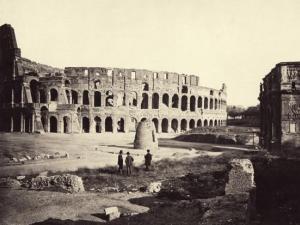
The Flavian Amphitheatre, better known as the Colosseum, is both a marvel of architecture and engineering, as well as a powerful symbol of Ancient Rome’s might and brutality.

The notoriety of this prince travelled far and wide until a well known shaikh in far away Shiraz in ancient Persia heard . “I must reform this prince before he squanders all his wealth on pomp and pleasure”, said the Shaikh to his followers. “I will travel to Samarqand and speak to him personally”. So saying, the Shaikh set off on foot for Samarqand with two of his companions.

To receive the latest topics on email directly as they are published

Comments
Send your comment