


Previous Article:
5 facts about the Colosseum
The Flavian Amphitheatre, better known as the Colosseum, is both a marvel of architecture and engineering, as well as a powerful symbol of Ancient Rome’s might and brutality.

With limited technology available, effective ‘in the field’ communication during the First World War was difficult. Communication was restricted mostly to physical message relaying, Morse signals, visual signals (lights and semaphore), and very basic radio communication where available.
Communication in the air was more problematic still, and so on many long-range flights homing pigeons were carried in special lightweight transit boxes in case an urgent message needed to be sent by the crew of an aircraft or airship – pigeons could, with care, be released from the aircraft during flight. This might be with hastily scribbled notes attached to the pigeon’s leg detailing enemy positions (ground and sea), or containing other vital information that the aircraft crew wanted to send back to base.
On long-range over-sea flights in Royal Navy reconnaissance and bomber aircraft such as the Felixstowe F2 flying boat or the Short Admiralty Type 184 floatplane, pigeons were an essential part of the in-flight emergency equipment. Should an aircraft have to make a forced landing at sea, a released pigeon that could get a last location message back to base might be the crew’s only chance of survival.
Such was the importance of message homing pigeons for wartime communication that the admiralty commissioned Royal Navy pigeon lofts at certain air stations, and each bird assigned to His Majesty’s Pigeon Service was issued an official military service number.
At the end of the First World War, the Royal Flying Corps and the Royal Naval Air Service were amalgamated into a new, combined service to be called the Royal Air Force (RAF). The first recognised Air Sea Rescue Squadron (ASRS) was then formed as an RAF unit.
The unit, whose motto was “The sea shall not have them”, consisted of high-speed-powered water craft, as well as seaplanes and flying boats. Many former Royal Naval Air Service pilots and aircrew transferred to the airborne branch of the ASRS, and many RAF crewmen found themselves developing new maritime roles as boat and high-powered launch crews.
As radio technology improved, so too did the potential for immediate and reliable radio communication between aircraft and land bases. With this, distress call “MAYDAY – MAYDAY – MAYDAY” was created (in 1923) for any pilot in an extreme emergency and needing to attract immediate radio attention. The call sign (from the French ‘M’aidez’, meaning ‘help me’) was initiated by Stanley Mockford, senior radio operator at Croydon Airport. Instantly successful, it has remained an internationally recognised distress call to this day.
By 1939 the Royal Navy had retaken possession of its flying branch, retitled the Fleet Air Arm and henceforth the Fleet Air Arm, and RAF have since operated their own individual search and rescue units.
As the Second World War escalated, so too did the amount of aerial combat sorties and general aircraft movements. This saw an increased number of aircraft being shot down or forced to land at sea, and an increased number of shipping casualties, particularly from U-boat attack.
During the conflict the Royal Navy, RAF Air Rescue Squadron and Coastal Command units were responsible for saving the lives of thousands of downed pilots and shipwrecked crews using fast patrol boats. Many new concepts were experimented with, including an ‘air-dropped’ full-sized (32-ft long) self-righting lifeboat.
Released from a suitably modified bomber aircraft and with its descent slowed by six parachutes, the Uffa-Fox lifeboat was capable of saving an entire bomber aircraft crew of up to nine people stranded at sea.
Helicopters are not commonly recognised as a piece of Second World War technology, however, basic helicopters were undergoing Anglo-American trials as early as November 1943 (before D-Day planning had even begun), with a clear emphasis on their potential as maritime search and rescue vehicles.
Such was the success of these early helicopter trials, that both the Royal Navy and RAF had Sikorsky R-4 helicopters undergoing extended trials by 1945, and each had squadrons equipped with the type by 1946.
The age of the helicopter had officially arrived, and the next 70 years would see the helicopter develop into a machine capable of lifting extensive loads and carrying as many as 20 people at speeds of more than 100 mph. The helicopter has been established as one of the most useful and versatile flying machines man has known.
As we turn the page on the first 100 years of airborne search and rescue, I wonder –what will search and rescue look like in 2115?
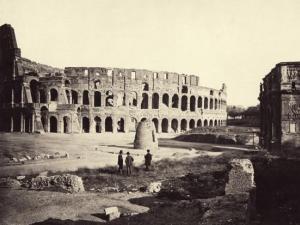
The Flavian Amphitheatre, better known as the Colosseum, is both a marvel of architecture and engineering, as well as a powerful symbol of Ancient Rome’s might and brutality.

The notoriety of this prince travelled far and wide until a well known shaikh in far away Shiraz in ancient Persia heard . “I must reform this prince before he squanders all his wealth on pomp and pleasure”, said the Shaikh to his followers. “I will travel to Samarqand and speak to him personally”. So saying, the Shaikh set off on foot for Samarqand with two of his companions.

To receive the latest topics on email directly as they are published

Comments
Send your comment