


Previous Article:
5 facts about the Colosseum
The Flavian Amphitheatre, better known as the Colosseum, is both a marvel of architecture and engineering, as well as a powerful symbol of Ancient Rome’s might and brutality.

Diocletian, who came to the throne in 284, was of lowly origins and lacked a formal higher education, but he came up with an answer that had eluded his predecessors. First, in 286, he appointed an old comrade in arms, Maximian, as co-Augustus. Then, in 293, he co-opted two junior imperial rulers, Constantius and Galerius, as Caesars.
The tetrarchy (rule of four) formed a college of emperors. As the empire had three frontiers facing high intensity external threats (the Rhine, Danube and the east), a member of the imperial college would be available to each, with one member in reserve.
Diocletian intended the tetrarchy to be self-perpetuating. In 305 he and Maximian retired. Constantius and Gallerius stepped up to the rank of Augustus, and two new Caesars were appointed. Yet the tetrarchy was not a permanent solution. Maximian had been reluctant to retire, and promptly attempted to reclaim power in 306. Civil war returned during the fourth century. But Diocletian had temporarily broken the vicious circle and bought the empire a vital breathing space.
Fifty years before Diocletian’s rise to power, Alexander Severus’s mother was said to have summoned the Christian thinker Origen to the imperial court. At the time, Christianity was a fringe religion, yet over the next half-century it was to experience a dramatic change in fortunes.
Many Romans knew that the well-being of their empire rested on the Pax Deorum, the right relations between Rome and the pagan gods. With the chaos of the third century, it was clear something had broken down. Christians, of course, denied the existence of the pagan gods and so, to the majority of the population, they were atheists. The troubles of the empire demonstrated that the gods were angry, and the cause of their displeasure might be found in the presence of atheist Christians within the empire.
Previously, with the exception of Nero, all persecutions of Christians had been localised and ‘bottom up’. A specific catalyst – a flood, drought, or similar – had led the population of pagans in the area to begin lynching and denouncing their Christian neighbours.
To keep order the Roman provincial governor had had to step in with official arrests and trials. In the face of a tumult of war and usurpation, this no longer seemed enough. In 249 the emperor Decius ordered that all the inhabitants of the empire should sacrifice to the traditional gods. In 257 the emperor Valerian commanded the first empire-wide persecution explicitly aimed at Christians. The following year he issued further, tougher instructions.
It was the fate of these first two imperial persecutors that catapulted Christianity to prominence. Decius was the first emperor to be cut down by barbarians in battle, and Valerian was the first to fall into their hands alive. Christians exulted, and it must have given even the most traditional Roman pagan cause for reflection. It seemed that the god of the Christians had demonstrated both his existence and his power, and he had taken revenge on those who raised their hands against his followers.
The Roman empire had survived the age of iron and rust, but those who had gained most were the Christians.
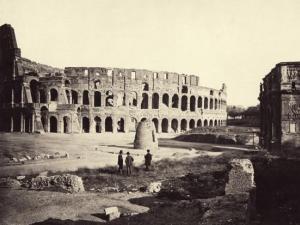
The Flavian Amphitheatre, better known as the Colosseum, is both a marvel of architecture and engineering, as well as a powerful symbol of Ancient Rome’s might and brutality.

The notoriety of this prince travelled far and wide until a well known shaikh in far away Shiraz in ancient Persia heard . “I must reform this prince before he squanders all his wealth on pomp and pleasure”, said the Shaikh to his followers. “I will travel to Samarqand and speak to him personally”. So saying, the Shaikh set off on foot for Samarqand with two of his companions.

To receive the latest topics on email directly as they are published

Comments
Send your comment