


Previous Article:
5 facts about the Colosseum
The Flavian Amphitheatre, better known as the Colosseum, is both a marvel of architecture and engineering, as well as a powerful symbol of Ancient Rome’s might and brutality.

From across the imperial frontiers, the Germans adopted improved farming techniques, the two crop rotation system, and iron ploughshares. Increased agricultural productivity allowed for population expansion. Having the empire as a neighbour stimulated trade, especially in slaves. This probably encouraged aggressive war-making among the already bellicose Germanic tribes.
Some barbarian war leaders will have expanded their territory at the expense of others. Also the flow of wealth generated by trade will have accumulated unevenly, the bulk going into the hands of leaders and their hearth-troops (bodyguards). This would have had the effect of stratifying German society, leading to the emergence of stronger leadership and a proto-nobility.
Two Roman policies accelerated the processes of change. Although the primacy of the legions draws attention away from the practice, Roman armies hired large numbers of mercenaries from beyond the borders. When a troop surge was needed for large-scale campaigning, it was cheaper and quicker to buy in warrior manpower from outside than to recruit and train within the empire. These barbarians served in their own units, often commanded by their own leaders. At the end of their term they returned to their homes, taking with them experience of the more sophisticated tactics and operating procedures of the Roman army. Notoriously, Arminius, the victor in the battle at Teutoburger Wald, had served as an officer in the Roman auxiliaries and had equestrian social status.
Some Roman leaders tried to subdue free Germania. Augustus sent army after army across the Rhine, until the Teutoburger Wald disaster, and the imperial prince Germanicus replicated this in the reign of Tiberius. Later the emperors Marcus Aurelius (in the second century) and Maximinus Thrax (in the third) were credited with plans to conquer as far as the northern ocean. But most emperors opted for a policy of diplomatic subsidies to favoured leaders, backed with the threat of force aimed at the more recalcitrant to keep the tribes quiescent and divided.
The influx of wealth from imperial diplomacy aided the growth of Germanic confederations. Rome found it easier to deal with more secure leaders of larger units – though, in the long term, this created potentially more dangerous enemies.
Recent archaeological studies offer a potentially new and important insight. From AD 162–80 Rome was embroiled in the Marcomannic wars against the peoples across the upper waters of the Rhine and Danube. From this period, finds in Scandinavia begin to increase both in wealth and in the numbers of Roman imports, including swords. The epicentre was the burial site at Himlingoje on the Danish island of Zealand.
The spread of artefacts, especially elaborate brooches (rosette fibulae), from Himlingoje to other sites in modern Scandinavia, Poland, and the Baltic countries suggests the appearance of a large political unit around the shores of the Baltic Sea. It has been argued that Rome employed diplomatic gifts and the supply of weapons to create an extensive client kingdom beyond the Marcomanni and its other enemies. Not only could the new power based at Himlingoje threaten the rear of Rome’s enemies, but it could supply new reserves of mercenaries. If the hypothesis is correct, the new extended political organisation could have acted as a model for the soon-to-emerge confederations of northern barbaricum.
The leaders of the Franks, Alamanni and Goths could have learnt from the royal dynasty of Himlingoje. In the north, as in the east, by different processes, but to the same result, Rome had assisted in the creation of enemies much more dangerous to its own empire. Yet often the greatest threat came from within the empire itself. The first emperor, Augustus, had, after all, come to power by civil war. The Roman empire has been described as an autocracy tempered by the legal right to military revolt. Once voted the correct titles – including maius imperium (military authority) – the victor in a civil war was as legitimate as the man he had replaced.
All emperors needed to monopolise military success and glory. All was well if the empire faced war on only one frontier: the emperor went to the war zone, and the result, more often than not, was a victory. If the campaign was a failure, however, the emperor could be seen to have shown himself as unfit for his role, and in the third century his troops might have overthrown him.
Problems also arose if there were wars on two fronts, and the reigning emperor lacked an adult son or other close relative to despatch to face the second threat. If a general was sent out who was not a member of the imperial family, and he did well, his soldiers might consider he had showed the right stuff to be emperor, and proclaim him. The resulting civil war would strip troops from the frontiers, which would encourage further barbarian incursions. Any local commanders who won victories against these new attacks might in turn be acclaimed emperor, leading to yet more civil conflict, and thus yet more external attacks. The basis of the role of the emperor contributed to the creation of a vicious circle of war, foreign and domestic.
stay tuned.............................
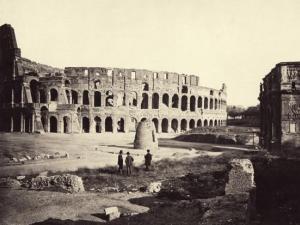
The Flavian Amphitheatre, better known as the Colosseum, is both a marvel of architecture and engineering, as well as a powerful symbol of Ancient Rome’s might and brutality.

The notoriety of this prince travelled far and wide until a well known shaikh in far away Shiraz in ancient Persia heard . “I must reform this prince before he squanders all his wealth on pomp and pleasure”, said the Shaikh to his followers. “I will travel to Samarqand and speak to him personally”. So saying, the Shaikh set off on foot for Samarqand with two of his companions.

To receive the latest topics on email directly as they are published

Comments
Send your comment