


Previous Article:
5 facts about the Colosseum
The Flavian Amphitheatre, better known as the Colosseum, is both a marvel of architecture and engineering, as well as a powerful symbol of Ancient Rome’s might and brutality.

A head for a stage prop
When Roman forces reached the Euphrates in the 60s BC, they met the Arsacid dynasty of the Parthians, which had been expanding westward for over two centuries. The understandable, if mistaken, Roman perception that their new eastern neighbour posed a serious threat was reinforced when the Parthians crushed the unprovoked invasion of the triumvir (part of a three-way Roman ruling alliance) Crassus at Carrhae in 53 BC. Having used Crassus’s head as a stage prop in a production of Euripides’s Bacchae, the Parthians subsequently raided Rome’s eastern provinces (40 BC), and, having been expelled, they defeated a campaign of retribution led by Mark Antony (36 BC).
Although diplomacy often was preferred to conflict when Rome was under the rule of the emperors, several major wars broke out between the two empires. Of these it is significant that only one (AD 162–66), in the joint reign of Marcus Aurelius and Lucius Verus, was instigated by the Parthians. The other four, under Trajan (114–16), Septimius Severus (194–95, 197–98), and Caracalla (217), were begun by the Romans. So it was not so much that Rome had a Parthian problem, more that Parthia had a Roman one.
The campaigns of the emperors Trajan, Lucius Verus and Septimius Severus broadly followed a pattern. The Roman army advanced down the Euphrates, took and plundered the Parthian capital of Ctesiphon, then withdrew. While resulting in no lasting gains, these invasions, above all the repeated sacking of Ctesiphon, did much to weaken the prestige of the Arsacid dynasty, and thus pave the way for its overthrow in the 220s by one of its own client kings, Ardashir of the house of Sasan.
The Persian Sassanid dynasty proved far more aggressive than its predecessor. Ardashir and his son Shapur launched repeated attacks upon Roman territory. Likewise their forces appeared more effective. The Sassanids defeated several Roman field armies in open battle, and, unlike the Parthians, had the capacity regularly to take fortified cities. Archaeology reveals the final siege of the fortress city of Dura-Europos on the Euphrates. By destabilising the dynasty of Parthia, quite unintentionally Rome had been complicit in replacing a reasonably pacific eastern neighbour with one far more lethal.
When the Roman historian Tacitus, in his book Germania, surveyed the barbarian world beyond the Rhine just before AD 100, he saw a myriad of small tribes. Egalitarian in their poverty, they lacked settled political leadership. Their warriors were without armour, and in most cases swords, and the war-band any tribe could put in the field lacked both numbers and organisation.
Yet, by the time Alexander Severus was murdered in the early third century, the ‘barbarians’ north of Rome’s borders had changed – and the Roman empire appears to have been the chief catalyst. Although many small, independent tribes remained, the first large Germanic confederations had emerged: the Franks in the north, the Alamanni beyond the headwaters of the Rhine and Danube, and the Goths by the shores of the Black Sea. These confederations’ forces appear to have been larger, better equipped, and more subject to command and control.
stay tuned....................
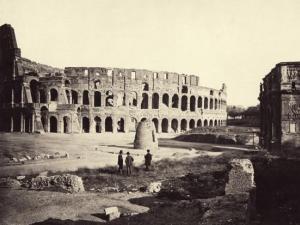
The Flavian Amphitheatre, better known as the Colosseum, is both a marvel of architecture and engineering, as well as a powerful symbol of Ancient Rome’s might and brutality.

The notoriety of this prince travelled far and wide until a well known shaikh in far away Shiraz in ancient Persia heard . “I must reform this prince before he squanders all his wealth on pomp and pleasure”, said the Shaikh to his followers. “I will travel to Samarqand and speak to him personally”. So saying, the Shaikh set off on foot for Samarqand with two of his companions.

To receive the latest topics on email directly as they are published

Comments
Send your comment