


Previous Article:
5 facts about the Colosseum
The Flavian Amphitheatre, better known as the Colosseum, is both a marvel of architecture and engineering, as well as a powerful symbol of Ancient Rome’s might and brutality.

Adored by those who love him, scorned by those who dislike him, Ayatollah Ruhullah Khomeini towers high as the central figure in the events leading up to the Iranian Revolution of 1979. He was a religious scholar, a revolutionary, a political leader and an ideologue all rolled into one and a principal player on the world stage in the second half of the twentieth century. Millions followed his lead. And millions opposed him. He offered a vision of heaven on earth to the Iranian people but his actions also brought untold hardships on the people of the Middle East. The twentieth century would not be the same without this giant figure.
The twentieth century witnessed the appearance of many a scholar who struggled with the grand issue of establishing an Islamic way of life. Some were successful; others perished in the struggle. Our distinguished readers are no doubt familiar with these works. The Turkish poet Zia was a primary source of inspiration for the secular Turkish Republic that was established by Kemal Ataturk following the dissolution of the Khilafat. The writings of Allama Iqbal formed the basis for a conceptualization of Pakistan.
Maulana Maududi provided perhaps the most voluminous narration for establishing an Islamic way of life. His political views were rejected by the Muslims of India but they found a niche in Pakistani politics. Hasan al Bannah and his Muslim brotherhood ran into the secular Arab nationalism of Gamal Abdel Nasser and were crushed. Syed Qutub was extreme in his rejection of all systems non-Islamic and his writings evoke suspicions of extremism even to this day.
Ali Shariati was a western trained liberal Islamic ideologue but his incisive works were cut short by his untimely death. Of all these attempts, only the idea of Vilayat e Faqih advanced by Khomeini found its full expression in the Iranian revolution of 1979. Khomeini was alone among scholars of his ilk who not only formulated their ideas but pursued them relentlessly and lived to try their implementation in the matrix of the national politics of an ancient and proud people and their impact on international affairs. Only Khomeini lived to see the triumph and tragedy of his ideas, its promise as well as its disappointments.
It must be emphasized at the outset that none of these ideas are applicable to societies wherein Muslims live as a small minority. They are only useful for their didactic and historical insights. Muslims in America, Europe, China or India, for instance, must engage in their own rigorous intellectual exercise and chart out their own destiny consistent with the promise and challenge of their specific and situational national experience. We have in the past advanced our own ideas for such a life based on Iman, Adl and Ehsan (www.encyclopediaofislamichistory.com) and have suggested a process for their implementation through SEEEC (spirituality, ethics, education, economics and cooperation). This is a continuous process and it must continue with broad participation from the knowledgeable public.
stay tuned............
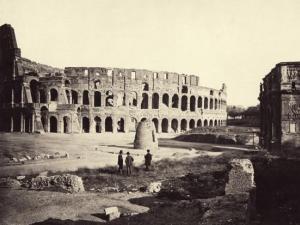
The Flavian Amphitheatre, better known as the Colosseum, is both a marvel of architecture and engineering, as well as a powerful symbol of Ancient Rome’s might and brutality.

The notoriety of this prince travelled far and wide until a well known shaikh in far away Shiraz in ancient Persia heard . “I must reform this prince before he squanders all his wealth on pomp and pleasure”, said the Shaikh to his followers. “I will travel to Samarqand and speak to him personally”. So saying, the Shaikh set off on foot for Samarqand with two of his companions.

To receive the latest topics on email directly as they are published

Comments
Send your comment