


Previous Article:
5 facts about the Colosseum
The Flavian Amphitheatre, better known as the Colosseum, is both a marvel of architecture and engineering, as well as a powerful symbol of Ancient Rome’s might and brutality.

Ancient Egypt’s “boy king” became pharaoh at the age of nine and ruled for approximately 10 years (c. 1333-1324 B.C.). Relatively obscure during his lifetime, Tutankhamen–or “King Tut”–became a household name in 1922, when the archaeologist Howard Carter found his remarkable tomb in Egypt’s Valley of the Kings. Despite several apparent grave robberies, the tomb was crammed with a wealth of ancient treasures, including jewelry, gilded shrines and a solid gold funerary mask. The discovery prompted a worldwide fascination with Egyptology in general and Tutankhamen in particular. Carter’s partner and financier, Lord Carnarvon, died of an infected mosquito bite several months after the pair opened the tomb. His death inspired the myth of the mummy’s curse, according to which anyone who dared intrude upon King Tut’s grave would suffer his wrath.
Regarded by many historians as Egypt’s most powerful pharaoh, Ramesses II reigned for six decades (c. 1279-1213 B.C.), lived to be over 90 years old and is said to have fathered upwards of 100 children. His body was originally entombed in the Valley of the Kings, as was customary for a pharaoh, but ancient Egyptian priests later moved it to thwart rampant looters. In 1881, Ramesses II’s mummy was discovered in a secret royal cache at Deir el-Bahri, along with those of more than 50 other rulers and nobles. In 1974, archeologists noticed its deteriorating condition and flew it to Paris, where it was treated for a fungal infection. Before the journey, Ramesses II was issued an Egyptian passport, which listed his occupation as “King (deceased).”
Located in Egypt’s Western Desert, the Bahariya Oasis was a major agricultural center during ancient times and is now home to several archaeological sites, including a Greek temple dedicated to Alexander the Great. In 1996, an antiquities guard was riding his donkey on the temple’s grounds. Suddenly, the donkey’s leg stumbled into a hole, revealing an opening in the desert floor and the edge of a tomb. A team of archaeologists led by Dr. Zahi Hawass began excavations of the site, known as the Valley of the Golden Mummies. The first few expeditions have uncovered several hundred mummies that date back to Egypt’s Greco-Roman period, as well as a treasure trove of artifacts. The diversity of the mummies’ adornments suggests that the site served as the final resting place for every level of society, including wealthy merchants, members of the middle class and poorer inhabitants. Archeologists believe that as many as 10,000 additional mummies may be lying under the sand.
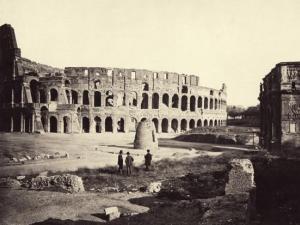
The Flavian Amphitheatre, better known as the Colosseum, is both a marvel of architecture and engineering, as well as a powerful symbol of Ancient Rome’s might and brutality.

The notoriety of this prince travelled far and wide until a well known shaikh in far away Shiraz in ancient Persia heard . “I must reform this prince before he squanders all his wealth on pomp and pleasure”, said the Shaikh to his followers. “I will travel to Samarqand and speak to him personally”. So saying, the Shaikh set off on foot for Samarqand with two of his companions.

To receive the latest topics on email directly as they are published

Comments
Send your comment