


Previous Article:
5 facts about the Colosseum
The Flavian Amphitheatre, better known as the Colosseum, is both a marvel of architecture and engineering, as well as a powerful symbol of Ancient Rome’s might and brutality.

Today, mummies are some of the most prized and highly valued artifacts of antiquity, but it might surprise you to know that prior to the 19th century, this wasn’t always the case. Rather than preserving them in museums, people would unwrap mummies and exploit their various parts. Their bones were ground up into powder and sold as medicine, and their wrappings were used to make paint. Some even say that early American paper manufacturers imported Egyptian mummies and made wrapping paper out of their bindings. Thankfully, these practices died out and mummies came to be seen as precious artifacts, which paved the way for some of the most remarkable discoveries in history.
Ginger
Nicknamed for its red hair, “Ginger” is the most famous of six naturally mummified bodies excavated in the late 19th century from shallow graves in the Egyptian desert. It went on display at the British Museum in 1901, becoming the first mummy to be exhibited in public, and has stayed there ever since. Ginger and the other bodies found with it are the oldest known mummies in existence, dating back to about 3400 B.C. Artificial mummification was not yet a common practice at the time of their deaths, but their bodies were naturally dried and preserved by the warm sand in which they were buried.
Hatshepsut
The most prominent female pharaoh, Hatshepsut reigned over Egypt for roughly two decades, undertaking ambitious building projects and establishing valuable new trade routes until her death in 1458 B.C. The archaeologist Howard Carter discovered her royal tomb in Egypt’s Valley of the Kings in 1902. When he located her sarcophagus some years later, however, it was found to be empty. Carter also unearthed a separate tomb, known as KV60, which contained two coffins: that of Hatshepsut’s wet nurse–identified as such by an inscription on its cover–and that of an unknown female. In 2006, a team led by Dr. Zahi Hawass set out to determine whether the anonymous woman in KV60 could be the missing queen herself. The vital piece of evidence was a molar tooth found in a wooden box bearing Hatshepsut’s name. When Hawass and his colleagues compared the tooth to a gap in the mummy’s upper jaw, it was a perfect fit, leading the researchers to conclude that the search for Hatshepsut was finally over.
Stay tuned..................
Source:
http://www.history.com/news/history-lists/5-great-mummy-discoveries
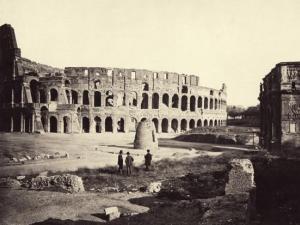
The Flavian Amphitheatre, better known as the Colosseum, is both a marvel of architecture and engineering, as well as a powerful symbol of Ancient Rome’s might and brutality.

The notoriety of this prince travelled far and wide until a well known shaikh in far away Shiraz in ancient Persia heard . “I must reform this prince before he squanders all his wealth on pomp and pleasure”, said the Shaikh to his followers. “I will travel to Samarqand and speak to him personally”. So saying, the Shaikh set off on foot for Samarqand with two of his companions.

To receive the latest topics on email directly as they are published

Comments
Send your comment