


Previous Article:
5 facts about the Colosseum
The Flavian Amphitheatre, better known as the Colosseum, is both a marvel of architecture and engineering, as well as a powerful symbol of Ancient Rome’s might and brutality.

Despite launching repeated assaults and bombardments, the Turks were unable to strike a decisive blow. The citizens of Candia—many of whom spent their whole lives under the blockade—always managed to drive back the Ottoman army and seal the breach before their fortress could be compromised. A French fleet arrived in 1669 to reinforce the city and help lift the siege, but quickly withdrew after its flagship was destroyed in battle. With Candia in ruins and only a few thousand troops left, the defenders finally surrendered shortly thereafter. By the time the blockade finally lifted in September 1669, the city had been under siege for an astonishing 21 years and four months.
This grisly standoff came as part of the Third Punic War, the last in a series of notoriously violent clashes between the ancient Romans and the Phoenician city of Carthage. In 149 B.C., a Roman army led by Scipio Aemilianus arrived in North Africa intent on destroying Carthage once and for all. Met by 60-foot walls, the Romans cordoned off the city, set up camp and laid siege.
The Carthaginians had prepared for the invasion by turning most of their city into an armory and enlisting slaves and civilians into the military. According to the ancient historian Appian, the women of Carthage even cut off their hair so it could be used as rope for makeshift catapults. Faced with this level of resistance, the Romans were held at bay for three long years. When they finally breached the walls in 146 B.C., Scipio’s forces had to fight their way through the city streets for six days and nights before defeating the Carthaginian resistance. By the time the battle had ended, the 700-year old city of Carthage lay in ruins and its remaining 50,000 inhabitants had been sold into slavery.
World War II’s Siege of Leningrad stands as a chilling reminder of the toll a military blockade can take on a civilian population. German forces first reached the city in 1941 as part of Operation Barbarossa, a massive surprise attack on the Soviet Union. Eager to avoid the carnage of urban warfare, the Nazis made no serious attempts to take Leningrad by force. Instead, Adolf Hitler opted for a brutal alternative—laying siege and starving the city into submission.
The 3 million inhabitants of Leningrad had been caught unprepared, and lacked sufficient supplies for a prolonged standoff. In addition to daily bombardments by the Luftwaffe, they were soon forced to contend with extreme hunger, freezing temperatures and disease. People ate everything from wallpaper paste to shoe leather to supplement their meager bread rations, and some even resorted to cannibalism. Despite these horrific circumstances, the citizens of Leningrad managed to endure life under siege for 872 days from September 1941 until January 1944. Even in victory, the siege proved tragic: By the time the city was finally freed by the Red Army, an estimated 1 million Soviets—most of them civilians—had perished.
At the same time that it was embroiled in combat with American colonists during the Revolutionary War, Great Britain was also locked in one of the great sieges in European history. The standoff began in 1779, after Spain and France officially entered the Revolution on the side of the Continentals. Eager to strike a blow against England, the two nations soon joined forces in an attempt to reclaim Gibraltar, a small, rocky outcropping on the Iberian Peninsula that played a key role in British naval operations in the Mediterranean.
In June 1779 a fleet of French and Spanish ships blockaded Gibraltar from the sea, while a large infantry force constructed redoubts and other fortifications on land. The two nations hoped they could force Gibraltar’s small garrison of 5,000 troops into a war of attrition, but their siege lines ultimately proved no match for the British Navy, which ran the blockade twice—first in 1780 and then again in 1781. In between these vital resupply operations, the defenders of Gibraltar kept the besiegers at bay with sharpshooters, cannon fire and surprise nighttime attacks. Realizing they could not starve out the garrison, the French and Spanish launched a massive offensive in September 1782, only to be thwarted by the British artillery’s use of “red-hot shot”—heated cannonballs that set fire to whole ships and batteries. Defeated, the French and Spanish finally lifted their blockade in February 1783. By that time, the British forces on Gibraltar had been under siege for three years and seven months.
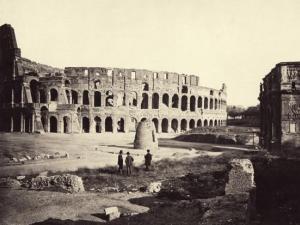
The Flavian Amphitheatre, better known as the Colosseum, is both a marvel of architecture and engineering, as well as a powerful symbol of Ancient Rome’s might and brutality.

The notoriety of this prince travelled far and wide until a well known shaikh in far away Shiraz in ancient Persia heard . “I must reform this prince before he squanders all his wealth on pomp and pleasure”, said the Shaikh to his followers. “I will travel to Samarqand and speak to him personally”. So saying, the Shaikh set off on foot for Samarqand with two of his companions.

To receive the latest topics on email directly as they are published

Comments
Send your comment