


Previous Article:
5 facts about the Colosseum
The Flavian Amphitheatre, better known as the Colosseum, is both a marvel of architecture and engineering, as well as a powerful symbol of Ancient Rome’s might and brutality.

If history is written by the victors, as Winston Churchill allegedly said, then what of the losers; how is their tale told? Our nation’s ruins offer this alternative history. Ruins tell the story of a constantly shifting balance of power. They tell us how even mighty armies and steadfast institutions can topple in the shifting sands of time. Ruins tell us of the forces, often way beyond our control, that continue to shape our lives to this day. The history of the ruin is, after all, the history written by the losing side.
1) Skara Brae – Mainland, Orkney
One February night in 1850, a storm raged its way through Scotland and up to the Orkney Islands. It was so ferocious that many were killed, and in Mainland Orkney a large layer of sand and turf was ripped from the coastline.
The next morning, locals found a number of roofless circular dwellings where once stood a large irregular dune. This was to be one of the most significant finds of the period. At first it was thought to be a Pictish settlement dating back to the Iron Age, around 500 BC. Much later, radiocarbon dating proved this estimate to be out by at least 2,000 years. Although estimates vary, it is thought the settlement was inhabited somewhere between 3,200 and 2,200 BC.
Being under the cover of sand for so long has meant that the village at Skara Brae is perhaps the best-preserved collection of Neolithic buildings in Europe. Built-in stone furniture still survives, and such is the level of detail it is easy to make out where inhabitants had their beds, where they lit their fires, and where they stored their food.
Skara Brae, situated 19 miles north-west of the port of Kirkwall, Orkney, is today managed by Historic Scotland.
2) St Helen’s Oratory and Cape Cornwall Tin Mine, Cornwall
Until the Ordnance Survey mapped the area, Cape Cornwall was thought to be the most westerly point in Britain. Situated four miles from Land’s End, just off the South West Coast Path, it is a beautiful and wild place, where on a sunny day the blueness of the sky is surpassed only by the vast expanse of Cornish sea.
As the only cape in England, it marks the meeting place of the swirling tides of both the Atlantic Ocean and the English Channel. The Cape is also a place where different tides of history meet. The ruined St Helen’s Oratory is an exquisite little ruin with grass and ferns growing from its crumbling walls, thought to date back to Romano-British times.
Much later, Cape Cornwall was home to a thriving tin mine big enough to need a large engine-house. Nearly all signs of the mine have vanished, and now all that remains is a single chimneystack at the end of a bracing walk at the peak of the Cape.
Cape Cornwall is today owned by the National Trust.
3) Old Wardour Castle, Wiltshire
One of the most striking yet often overlooked ruins in the country is that of 14th-century Old Wardour Castle. Serving as a testament to its splendour, Capability Brown used it as a landscape feature when he designed the gardens of the New Wardour House toward the end of the 18th century. But in 1643, the castle was put to the test as a stronghold when 1,300 parliamentary troops laid siege.
With her husband away, 61-year-old Lady Blanche Arundell was left to defend the castle with just 25 retained staff, including cooks and gardeners. Despite being massively outnumbered, the valiant Lady Arundell held out for five days before she eventually surrendered. The castle didn’t stay in the hands of the invading force for long: the following year Lady Arundell’s son, Henry Arundell, 3rd Baron Arundell of Wardour, returned to win back the family castle. During the siege, however, he blew up a substantial part of the castle and it was damaged beyond repair.
stay tuned.......................
Source:
http://www.historyextra.com/article/culture/britains-7-most-amazing-ruins
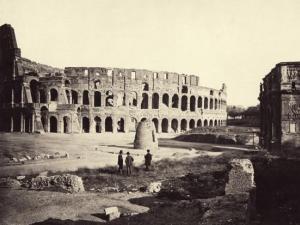
The Flavian Amphitheatre, better known as the Colosseum, is both a marvel of architecture and engineering, as well as a powerful symbol of Ancient Rome’s might and brutality.

The notoriety of this prince travelled far and wide until a well known shaikh in far away Shiraz in ancient Persia heard . “I must reform this prince before he squanders all his wealth on pomp and pleasure”, said the Shaikh to his followers. “I will travel to Samarqand and speak to him personally”. So saying, the Shaikh set off on foot for Samarqand with two of his companions.

To receive the latest topics on email directly as they are published

Comments
Send your comment