


Previous Article:
5 facts about the Colosseum
The Flavian Amphitheatre, better known as the Colosseum, is both a marvel of architecture and engineering, as well as a powerful symbol of Ancient Rome’s might and brutality.

One of the most audacious plots unfolded on March 13, 1943, when Hitler arrived at the Smolensk post of Henning von Tresckow—a disillusioned German military officer—for a brief visit. Before the Führer and his entourage boarded their plane for the return trip, Tresckow approached a member of Hitler’s staff and asked if the man would take a parcel containing two bottles of Cointreau brandy to a friend in Berlin. The officer obliged, not knowing that the package actually held plastic explosives rigged to a 30-minute fuse.
Tresckow and his co-conspirator Fabian von Schlabrendorff hoped Hitler’s death would be the catalyst for a planned coup against the Nazi high command, but their plan went up in smoke only a few hours later, when they received word that the Führer’s plane had landed safely in Berlin. “We were stunned and could not imagine the cause of the failure,” Schlabrendorff later remembered. “Even worse would be the discovery of the bomb, which would unfailingly lead to our detection and the death of a wide circle of close collaborators.” A panicked Tresckow phoned the staff officer and told him there had been a mistake with the package. The next day, Schlabrendorff traveled to Hitler’s headquarters and exchanged the concealed bomb for two bottles of brandy. Upon inspection, he found that a defective fuse was all that had prevented Hitler’s plane from being blown out of the sky.
Only a week after Tresckow’s brandy bomb failed to explode, he and his co-conspirators made yet another attempt on Hitler’s life. This time, the scene of the assassination was an exhibition of captured Soviet flags and weaponry in Berlin, which the Führer was scheduled to visit for a tour. An officer named Rudolf von Gertsdorff volunteered to be the triggerman for a bomb attack, but after scouting the premises, he came to a grim realization: security was too tight to plant explosives in the room. “At this point it became clear to me that an attack was only possible if I were to carry the explosives about my person,” he later wrote, “and blow myself up as close to Hitler as possible.” Gersdorff decided to proceed, and on March 21, he did his best to stay glued to the Führer’s side as he guided him through the exhibit. The bomb had a short 10-minute fuse, but despite Gersdorff’s attempts to prolong the tour, Hitler slipped out a side door after only a few minutes. The would-be suicide bomber was forced to make a mad dash for the bathroom, where he defused the explosives with only seconds to spare.
Shortly after the D-Day invasions in the summer of 1944, a clique of disgruntled German officers launched a campaign to assassinate Hitler at his “Wolf’s Lair” command post in Prussia. At the center of the plot was Claus von Stauffenberg, a dashing colonel who had lost an eye and one of his hands during combat in North Africa. He and his co-conspirators—who included Tresckow, Friedrich Olbricht and Ludwig Beck—planned to kill the Führer with a hidden bomb and then use the German Reserve Army to topple the Nazi high command. If their coup was successful, the rebels would then immediately seek a negotiated peace with the Allies.
Stauffenberg put the plan into action on July 20, 1944, after he and several other Nazi officials were called to a conference with Hitler at the Wolf’s Lair. He arrived carrying a briefcase stuffed with plastic explosives connected to an acid fuse. After placing his case as close to Hitler as possible, Stauffenberg left the room under the pretense of making a phone call. His bomb detonated only minutes later, blowing apart a wooden table and reducing much of the conference room to charred rubble. Four men died, but Hitler escaped with non-life-threatening injuries—an officer had happened to move Stauffenberg’s briefcase behind a thick table leg seconds before the blast. The planned revolt unraveled after news of the Führer’s survival reached the capital. Stauffenberg and the rest of the conspirators were all later rounded up and executed, as were hundreds of other dissidents. Hitler supposedly boasted that he was “immortal” after the July Plot’s failure, but he became increasingly reclusive in the months that followed and was rarely seen in public before his suicide on April 30, 1945.
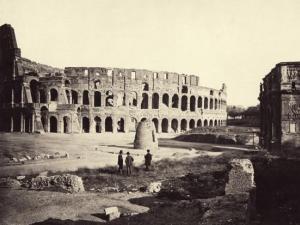
The Flavian Amphitheatre, better known as the Colosseum, is both a marvel of architecture and engineering, as well as a powerful symbol of Ancient Rome’s might and brutality.

The notoriety of this prince travelled far and wide until a well known shaikh in far away Shiraz in ancient Persia heard . “I must reform this prince before he squanders all his wealth on pomp and pleasure”, said the Shaikh to his followers. “I will travel to Samarqand and speak to him personally”. So saying, the Shaikh set off on foot for Samarqand with two of his companions.

To receive the latest topics on email directly as they are published

Comments
Send your comment