


Previous Article:
5 facts about the Colosseum
The Flavian Amphitheatre, better known as the Colosseum, is both a marvel of architecture and engineering, as well as a powerful symbol of Ancient Rome’s might and brutality.

7) A Brit almost beat the Wright brothers in the race for powered flight
Percy Pilcher was a naval engineer with a penchant for flying, and he came close to discovering the secrets of powered flight in Britain four years before the Wright brothers took to the air in the United States.
In 1895 Pilcher built his first glider called ‘The Bat’, which took to the air at Cardross in Scotland. He travelled to Germany to seek inspiration from the gliders of Otto Lilienthal, using these as inspiration to build two further gliders, ‘The Beetle’ and ‘The Gull’. Pilcher’s finest glider was ‘The Hawk’, which featured the world’s first sprung, wheeled undercarriage. This made flights of up to 820 feet and was even flown by a woman, Pilcher’s cousin Dorothy Pilcher.
Pilcher’s ultimate ambition was powered flight, and in 1896 he filed a patent for a powered aeroplane. By 1899 he had built a triplane and a lightweight engine to power it. He organised a demonstration of his plane for 30 September at Stanford Hall near Market Harborough. The stage was set, but unfortunately the crankshaft broke days before the first flight. Desperate for sponsorship and unwilling to let the opportunity pass, Pilcher decided to fly ‘The Hawk’ glider instead.
Tragically the flight of ‘The Hawk’ ended in a crash that could be heard hundreds of yards away, and Percy was terribly injured. He never regained consciousness and died two days later at Stanford Hall.
8) A scientist who worked on the development of a nuclear bomb ended up winning a Nobel peace prize 50 years later
Joseph Rotblat was born in Warsaw in 1908. By 1938 he had a PhD from Warsaw University and was making a name for himself as a physicist. Rotblat came from a Jewish family and as the clouds of war gathered over Poland he was offered a fellowship by the University of Liverpool.
By 1944 Rotblat had established himself as one of the world’s leading nuclear physicists. He was invited to join the Manhattan Project and work on the world’s first nuclear bomb. He accepted, fearing that the Germans would succeed in making their own nuclear weapon, and he saw the development of an allied weapon as an effective deterrent.
However, when it became clear that Germany would be defeated before it was able to develop a usable nuclear device, Rotblat felt that he could no longer justify working on such a powerful, destructive weapon. Consequently he returned to Liverpool University.
In 1955 Rotblat was one of 11 scientists, including Albert Einstein, to sign a manifesto calling upon scientists to cooperate and to try to prevent nuclear war. In 1957 Rotblat became a founding member and the secretary-general of the Pugwash Conference on Science and World Affairs – a position he held until 1973. Named after a village in Nova Scotia where they first met, the conference included scientists from both sides of the Iron Curtain. The conferences played a key role in ending the Cold War, and for this work Rotblat received the 1995 Nobel peace prize.
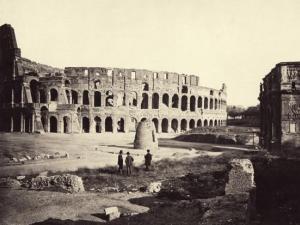
The Flavian Amphitheatre, better known as the Colosseum, is both a marvel of architecture and engineering, as well as a powerful symbol of Ancient Rome’s might and brutality.

The notoriety of this prince travelled far and wide until a well known shaikh in far away Shiraz in ancient Persia heard . “I must reform this prince before he squanders all his wealth on pomp and pleasure”, said the Shaikh to his followers. “I will travel to Samarqand and speak to him personally”. So saying, the Shaikh set off on foot for Samarqand with two of his companions.

To receive the latest topics on email directly as they are published

Comments
Send your comment