


Previous Article:
5 facts about the Colosseum
The Flavian Amphitheatre, better known as the Colosseum, is both a marvel of architecture and engineering, as well as a powerful symbol of Ancient Rome’s might and brutality.

5) The Civil War saw shocking behaviour
The Civil War began in 1642, when Charles I left London, having failed to arrest his enemies in parliament. It ended in 1646 when the king surrendered to the Scots. Before the king’s execution in 1649, a further civil war was fought as royalists in Kent, South Wales and Scotland took up arms against the New Model Army of parliament. The 1648 siege of Colchester was the last engagement of this war. As Lord Goring led his royalist army away from Kent to link up with royalists in Suffolk he took shelter in parliament, supporting Colchester.
The siege lasted from June to August 1648. It was a particularly brutal affair, given that the parliamentary army claimed to be God-fearing individuals. When the parliamentary army seized St John’s Abbey, they exhumed the body of the mother of the royalist leader Sir Charles Lucas and put locks of her hair on their hats.
Having failed to storm Colchester, the parliamentary army built wooden forts around the town and settled down to starve the royalists into surrender. It was innocent civilians who suffered most. The meagre food available was commandeered by the royalist army. With a side of dog going for six shillings, many citizens were forced to survive by eating their candles, which were made from mutton fat. The women of Colchester sat on the street outside royalist headquarters asking for help. None was forthcoming, so the women fled outside the town to appeal to Fairfax and his army. The parliamentary army laughed at the women and threatened to strip them naked if they didn’t go back into the town. Humiliated, they did as they were told.
Even when the siege was over there was no sense of reconciling a divided nation. The royalist leaders Lucas and Lisle were executed and the town was fined £14,000, despite having supported parliament throughout the war.
before the German V1
The British army first came up against rockets in India in the late 18th century: in 1780 Indian rockets ignited the British ammunition stores at the battle of Pollilur. Colonel Wellesley, the future Duke of Wellington, was impressed by the destructive power of Indian rockets. When the war ended in 1799 some rockets were brought back to the Royal Military College at Woolwich as trophies.
At Woolwich the rockets were discovered by William Congreve, who set about refining the design and turning skyrockets into military weapons. By 1805 he had developed rockets with a range of 2,000 yards – well over a mile. At first these ‘Congreve rockets’ were used in naval attacks on Boulogne and Copenhagen. Despite some setbacks with the accuracy of the weapons fired from a rolling ship, they helped the navy set fire to buildings in both cities.
In October 1813, the Second Rocket Troop of the Royal Artillery was the only British unit at the battle of Leipzig, the so-called battle of Nations. The rockets put to flight an entire French column of 2,500 troops.
to be continued....................
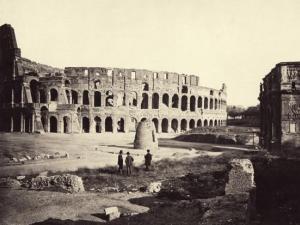
The Flavian Amphitheatre, better known as the Colosseum, is both a marvel of architecture and engineering, as well as a powerful symbol of Ancient Rome’s might and brutality.

The notoriety of this prince travelled far and wide until a well known shaikh in far away Shiraz in ancient Persia heard . “I must reform this prince before he squanders all his wealth on pomp and pleasure”, said the Shaikh to his followers. “I will travel to Samarqand and speak to him personally”. So saying, the Shaikh set off on foot for Samarqand with two of his companions.

To receive the latest topics on email directly as they are published

Comments
Send your comment