


Previous Article:
5 facts about the Colosseum
The Flavian Amphitheatre, better known as the Colosseum, is both a marvel of architecture and engineering, as well as a powerful symbol of Ancient Rome’s might and brutality.

3) Harold II (the one with the arrow in his eye) was not the last Saxon king
Between 14 October 1066, when Harold II was killed at the battle of Hastings, and 25 December, when William I was crowned at Westminster Abbey, England was ruled, at least in theory, by Edgar Atheling, who took the title Edgar II, the last of the Saxon kings.
Edgar was the son of Edward the Exile and his claim to the throne came from his grandfather, Edmund Ironside, the third son of the Saxon king Aethelred the Unready. Edgar was given the name ‘Atheling’, meaning heir or royal prince, by Edward the Confessor, which suggests that Edward was considering him as his successor.
When Edward died in January 1066, Edgar Atheling may have had the strongest blood-claim to the throne, but he did not have the political support in the witan [the council summoned by Anglo-Saxon kings] enjoyed by Harold Godwineson or the military strength of either Harald Hardrada or William of Normandy. Therefore, his claim to the throne was ignored.
However, following the death of Harald Hardrada at the battle of Stamford Bridge in September 1066 and Harold Godwineson at Hastings in October, Edgar was the obvious choice for those who still opposed William. The witan in London was quick to get Archbishop Stigand to crown Edgar. However, as William approached London and began burning villages to intimidate the Saxons, support for Edgar vanished.
Edgar did not give up and he was to spend the remainder of his life campaigning to become king of England, or at least to establish his influence over Norman England. He and his family headed north for Scotland, where its king, Malcolm III, was happy to give refuge to Saxons escaping from the Normans. Edgar’s sister Margaret married Malcolm III of Scotland in 1069 and as a result Scotland was to provide a safe haven for Edgar for much of the rest of his life. It was often from Scotland that he campaigned to influence events in England.
When William died in 1087 he left his land in Normandy to his eldest son, Robert Curthouse, and his younger son William Rufus became William II, king of England. In the subsequent power struggle between William’s sons, Edgar backed Robert, hoping that the elder son would win. Once again, Edgar ended on the losing side, as in 1096 Robert went off to Crusade, which he financed by mortgaging Normandy to William Rufus.
Edgar went on to outlive William II, who died in a hunting accident in 1100, and the throne of England passed to Henry I. Edgar continued to support the claims of Robert Curthouse, Duke of Normandy. He was imprisoned when Henry I defeated Robert at the battle of Tinchebray. However, he was released thanks to his Scottish connection. His niece Edith, daughter of his sister Margaret and Malcolm III, had married Henry I of England.
Edgar is thought to have died in 1125. His rule, as the last of the Saxons, may have been a matter of weeks, but he was to outlive both William and his sons.
4) Henry VIII was never intended to be a king of England
Prince Arthur was the eldest son of Henry VII and Elizabeth of York and was the legitimate heir to the Tudor throne, rather than his younger brother Prince Henry.
Henry Tudor defeated Richard III at the battle of Bosworth in August 1485 and installed the Tudor dynasty. In January 1486 Henry Tudor strengthened his claim to the throne by marrying Elizabeth of York, the eldest daughter of Edward IV, thus uniting the houses of York and Lancaster.
Almost exactly nine months later, on 19 September 1486, Henry and Elizabeth’s first son was born at St Swithun’s Priory in Winchester. The proud parents chose the name Arthur, hoping his reign would introduce a new ‘Arthurian age’. Sir Thomas Malory’s Le Morte d’Arthur [telling the legends of King Arthur and his knights] was hot off the Caxton press, published the previous year.
In 1490 the young Arthur was invested as Prince of Wales and, at the grand age of six, was appointed keeper of England and king’s lieutenant when his father was away in France. In 1497 Henry VII arranged for Arthur to marry Princess Catherine, the daughter of Queen Isabella I of Castile and King Ferdinand II of Aragon.
Catherine and Arthur were married in St Paul’s cathedral in October 1501. Shortly afterwards they left for Ludlow, where they established their residence. However, the couple’s happiness was short-lived and, according to Catherine, their marriage was never consummated. Arthur fell ill and died on 2 April 1502 at the age of 15. He was buried in Worcester Cathedral.
Catherine of Aragon, of course, stayed in England and became the first wife of Arthur’s younger brother Henry.
stay tuned..............
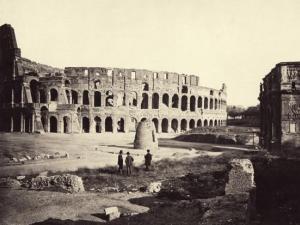
The Flavian Amphitheatre, better known as the Colosseum, is both a marvel of architecture and engineering, as well as a powerful symbol of Ancient Rome’s might and brutality.

The notoriety of this prince travelled far and wide until a well known shaikh in far away Shiraz in ancient Persia heard . “I must reform this prince before he squanders all his wealth on pomp and pleasure”, said the Shaikh to his followers. “I will travel to Samarqand and speak to him personally”. So saying, the Shaikh set off on foot for Samarqand with two of his companions.

To receive the latest topics on email directly as they are published

Comments
Send your comment