


Previous Article:
5 facts about the Colosseum
The Flavian Amphitheatre, better known as the Colosseum, is both a marvel of architecture and engineering, as well as a powerful symbol of Ancient Rome’s might and brutality.

Most of us are familiar with British history’s landmark events: the Roman invasion, the battle of Hastings, Magna Carta, the Reformation and so forth. But what about the overlooked, lesser-known moments? In his new book, Philip Laycock takes readers on a journey through Britain’s hidden history
1) Boudicca was not the only Briton to cause nuisance to the Romans
Pelagius was a British heretic who caused grief for St Augustine and the Christian Church of the late Roman empire.
Pelagius was born somewhere in the British Isles at the end of the fourth century. St Jerome described him as “Scottorum pultibus praegravatus” or “weighed down by Irish porridge”, so his origins may have been in Scotland or even Ireland.
Wherever he was born, Pelagius turned up in Rome at the turn of the fifth century and began preaching views that caused great offence to St Augustine, the theological superstar of the time. While St Augustine taught that sin was original, could not be avoided and could only be solved by God’s grace, Pelagius preached that Christians possessed an element of choice. Individual humans could choose whether to sin or not. Today, in an age of free will, this idea may not seem controversial, but in the fifth century such views were considered heresy.
However, in 410 the army of Alaric was a more dangerous threat to the safety of Rome than a British heretic. Pelagius fled to Africa and then Palestine, where he attempted to prove he was not a heretic. In 418 the emperor Honorius weighed in against him and he was banned from Italy. Things got worse when the wonderfully named Pope Zosimus excommunicated him. Pelagius fled to Egypt, where he disappeared from the records.
2) Saxon women did exercise political influence
Corfe Castle in Dorset was the scene of Edward the Martyr’s death, on 18 March 978. Some people assume his stepmother, Aelfthryth, was responsible.
Aelfthryth, meaning ‘elf-strength’, was the beautiful daughter of a powerful ealdorman [a high-ranking royal official and prior magistrate of an Anglo-Saxon shire] in 10th-century Wessex. King Edgar sent his friend Aethelwald to check her out. Aethelwald liked what he saw and himself married Aelfthryth, while telling King Edgar that she was not worth the king’s effort. However, Edgar must have suspected that his friend had betrayed him and decided to pay Aethelwald and Aelfthryth a visit.
Aethelwald panicked and told his wife to make herself look ugly, to hide his deception from the king. Aelfthryth ignored her husband’s instructions to hide her beauty, and instead set out to make the most of her charms. Edgar was transfixed. Subsequently, Aethelwald died in a mysterious (and somewhat suspicious) accident while hunting with Edgar, and Aelfthryth became queen.
This is the scandalous story written down by William of Malmesbury in the 12th century and it may contain elements that are untrue. However, it is clear that by 964/5 Aelfthryth had married Edgar and was queen.
Aelfthryth was an active queen. She took an interest in nunneries and became aforespeca – an advocate helping to mediate between people and the crown. However, it was in securing the interest of her two sons, Edmund and Aethelred, that she was to be most active.
The problem was that King Edgar had had a child, Edward, from a previous relationship, and Edward was older than Aelfthryth’s sons. When Edgar died in 975 it was Edward who became king. His reign was cut short when, during a visit to Corfe Castle to see Aelfthryth and her surviving son, Aethelred, he was killed (Edmund had died of natural causes). What role Aelfthryth played in the murder remains unclear, but Edward was increasingly viewed as a martyr.
Following Edward’s death Aelfthryth became regent and ruled until Aethelred came of age in 984. Aethelred, known by his nickname ‘unready’ – meaning ‘without counsel’ – is better known than his mother, but it is to his mother that he owed the throne.
stay tuned..................
source:
http://www.historyextra.com/article/vikings/8-surprising-facts-british-history
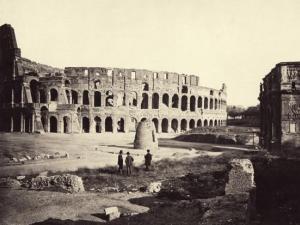
The Flavian Amphitheatre, better known as the Colosseum, is both a marvel of architecture and engineering, as well as a powerful symbol of Ancient Rome’s might and brutality.

The notoriety of this prince travelled far and wide until a well known shaikh in far away Shiraz in ancient Persia heard . “I must reform this prince before he squanders all his wealth on pomp and pleasure”, said the Shaikh to his followers. “I will travel to Samarqand and speak to him personally”. So saying, the Shaikh set off on foot for Samarqand with two of his companions.

To receive the latest topics on email directly as they are published

Comments
Send your comment