


Previous Article:
5 facts about the Colosseum
The Flavian Amphitheatre, better known as the Colosseum, is both a marvel of architecture and engineering, as well as a powerful symbol of Ancient Rome’s might and brutality.

If Rome’s sheer size made it difficult to govern, ineffective and inconsistent leadership only served to magnify the problem. Being the Roman emperor had always been a particularly dangerous job, but during the tumultuous second and third centuries it nearly became a death sentence. Civil war thrust the empire into chaos, and more than 20 men took the throne in the span of only 75 years, usually after the murder of their predecessor. The Praetorian Guard—the emperor’s personal bodyguards—assassinated and installed new sovereigns at will, and once even auctioned the spot off to the highest bidder. The political rot also extended to the Roman Senate, which failed to temper the excesses of the emperors due to its own widespread corruption and incompetence. As the situation worsened, civic pride waned and many Roman citizens lost trust in their leadership.
The Barbarian attacks on Rome partially stemmed from a mass migration caused by the Huns’ invasion of Europe in the late fourth century. When these Eurasian warriors rampaged through northern Europe, they drove many Germanic tribes to the borders of the Roman Empire. The Romans grudgingly allowed members of the Visigoth tribe to cross south of the Danube and into the safety of Roman territory, but they treated them with extreme cruelty. According to the historian Ammianus Marcellinus, Roman officials even forced the starving Goths to trade their children into slavery in exchange for dog meat. In brutalizing the Goths, the Romans created a dangerous enemy within their own borders. When the oppression became too much to bear, the Goths rose up in revolt and eventually routed a Roman army and killed the Eastern Emperor Valens during the Battle of Adrianople in A.D. 378. The shocked Romans negotiated a flimsy peace with the barbarians, but the truce unraveled in 410, when the Goth King Alaric moved west and sacked Rome. With the Western Empire weakened, Germanic tribes like the Vandals and the Saxons were able to surge across its borders and occupy Britain, Spain and North Africa.
The decline of Rome dovetailed with the spread of Christianity, and some have argued that the rise of a new faith helped contribute to the empire’s fall. The Edict of Milan legalized Christianity in 313, and it later became the state religion in 380. These decrees ended centuries of persecution, but they may have also eroded the traditional Roman values system. Christianity displaced the polytheistic Roman religion, which viewed the emperor as having a divine status, and also shifted focus away from the glory of the state and onto a sole deity. Meanwhile, popes and other church eladers took an increased role in political affairs, further complicating governance. The 18th-century historian Edward Gibbon was the most famous proponent of this theory, but his take has since been widely criticized. While the spread of Christianity may have played a small role in curbing Roman civic virtue, most scholars now argue that its influence paled in comparison to military, economic and administrative factors.
For most of its history, Rome’s military was the envy of the ancient world. But during the decline, the makeup of the once mighty legions began to change. Unable to recruit enough soldiers from the Roman citizenry, emperors like Diocletian and Constantine began hiring foreign mercenaries to prop up their armies. The ranks of the legions eventually swelled with Germanic Goths and other barbarians, so much so that Romans began using the Latin word “barbarus” in place of “soldier.” While these Germanic soldiers of fortune proved to be fierce warriors, they also had little or no loyalty to the empire, and their power-hungry officers often turned against their Roman employers. In fact, many of the barbarians who sacked the city of Rome and brought down the Western Empire had earned their military stripes while serving in the Roman legions.
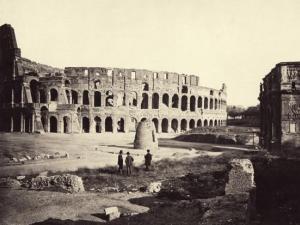
The Flavian Amphitheatre, better known as the Colosseum, is both a marvel of architecture and engineering, as well as a powerful symbol of Ancient Rome’s might and brutality.

The notoriety of this prince travelled far and wide until a well known shaikh in far away Shiraz in ancient Persia heard . “I must reform this prince before he squanders all his wealth on pomp and pleasure”, said the Shaikh to his followers. “I will travel to Samarqand and speak to him personally”. So saying, the Shaikh set off on foot for Samarqand with two of his companions.

To receive the latest topics on email directly as they are published

Comments
Send your comment