


Previous Article:
5 facts about the Colosseum
The Flavian Amphitheatre, better known as the Colosseum, is both a marvel of architecture and engineering, as well as a powerful symbol of Ancient Rome’s might and brutality.

The marathon
In 490 B.C., as the story goes, a Greek soldier ran from Marathon to Athens, a distance of just over 26 miles, to bring news of the Athenian victory over the Persians in the Battle of Marathon. After delivering his message, the soldier promptly died. Over the centuries, his story became conflated with that of another, more famous, Greek soldier: Pheidippides. Before the Battle of Marathon took place, Pheidippides ran from Athens to Sparta to warn other Greeks of the Persian invasion, reportedly covering some 250 kilometers of uneven terrain in only two days. Unfortunately, Sparta was in the middle of a religious celebration when he arrived, and the Spartans were unable to mobilize for war until it was too late; the battle was already over. The first modern marathon took place at the revived Olympic Games in Athens in 1896 and was won—fittingly—by a Greek runner, Spyridon Louis.
Concrete
The frighteningly durable substance known as opus caementicium, or Roman concrete, first emerged some 2,100 years ago, and would make possible the architectural frenzy that began with Augustus, the first Roman emperor, in 27 B.C. The Romans mixed limestone with volcanic ash to form a mortar, then packed this thick substance together with chunks of brick or volcanic tuff to form the basic material for roads, bridges, aqueducts, buildings and other structures—including such enduring behemoths as the Pantheon and the Colosseum. Today’s scientists have concluded that Roman concrete, though weaker than modern cement, is astonishingly long lasting, remaining relatively intact even after centuries of exposure to seawater and other damaging elements.
Newspaper
The Acta Diurna (or “daily acts”), which first appeared around 131 B.C., served as a gazette of political and social happenings in ancient Rome. News of events such as military victories, gladiatorial bouts and other games, births and deaths and even human-interest stories were inscribed on metal or stone and posted in areas with heavy foot traffic, such as the Roman Forum. Later on, during the first consulship of Julius Caesar, the Acta Senatus began chronicling the activities of the Roman Senate. The Acta Diurna, which continued publication under the Roman Empire (after 27 B.C.), can be considered the prototype for the modern newspaper.
Chocolate
This all-important invention comes from the beans of the cacao tree, which was cultivated more than 3,000 years ago by the Maya, Aztec and Toltec peoples of ancient Mesoamerica. These civilizations used the tree’s fruit, the cocoa bean, to prepare a frothy beverage they considered an energy drink, mood enhancer and aphrodisiac all in one. The Maya worshiped the cacao tree as sacred, and cocoa beans grew so valuable they were used as currency. In the 16th century, Spanish conquistadores seeking gold and silver in the New World brought chocolate back to Europe with them, launching a craze that—let’s be honest—never really ended.
Zero
For all its importance, it may surprise you to learn that zero is a relatively recent concept in human history, though it still has its roots in ancient times. The idea to use a zero-like symbol as a placeholder—to show the difference between 10 and 100, for example, or to show the absence in one column of another number (e.g. 2015)—emerged sometime after 300 B.C., when the ancient Babylonians adapted the Sumerian counting system. Half a world away, in ancient Mesoamerica, the Maya came up with the idea of zero as a placeholder independently, around A.D. 350. They used it in their elaborate calendar systems, but like the Babylonians, didn’t really conceive of zero as a number in itself or use it in equations. The more complete vision of zero didn’t emerge until the 7th century in India, when the Hindu astronomer Brahmagupta wrote rules for using zero in mathematical operations and equations, introducing the concept that zero could be seen as a number of its own.
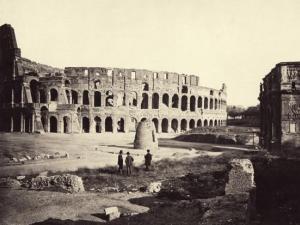
The Flavian Amphitheatre, better known as the Colosseum, is both a marvel of architecture and engineering, as well as a powerful symbol of Ancient Rome’s might and brutality.

The notoriety of this prince travelled far and wide until a well known shaikh in far away Shiraz in ancient Persia heard . “I must reform this prince before he squanders all his wealth on pomp and pleasure”, said the Shaikh to his followers. “I will travel to Samarqand and speak to him personally”. So saying, the Shaikh set off on foot for Samarqand with two of his companions.

To receive the latest topics on email directly as they are published

Comments
Send your comment