


Previous Article:
5 facts about the Colosseum
The Flavian Amphitheatre, better known as the Colosseum, is both a marvel of architecture and engineering, as well as a powerful symbol of Ancient Rome’s might and brutality.

If you take a good look, it may surprise you to learn how many of the objects that surround you every day were originally invented thousands of years ago by the ancient Egyptians, Greeks, Romans or other societies. These advanced civilizations came up with ideas that would revolutionize their existence—and ours. Here are eight of the most useful objects, ideas and institutions that we owe to the ancients.
Paper
As early as 3000 B.C., Egyptians had developed a technique for making paper from the pith of the papyrus plant, a common sight along the bank of the Nile. Long strips were woven together and weighted down to bind them into a strong, thin sheet. The Egyptians also invented pens made of cut reeds, which were strong enough to write on the papyrus, and mixed soot or other organic material with beeswax and vegetable gum to make ink. These ancient papermakers knew what they were doing: Many of these papyrus sheets inscribed with Egyptian hieroglyphics remain intact and readable, even after more than 5,000 years.
Eye makeup
Ancient Egyptians knew all about the power of a smoky eye. Way back in 4000 B.C., they started making kohl to line their eyes by mixing soot with galena, a mineral with a metallic bluish, gray or black hue. In some ancient paintings, Egyptians are depicted wearing green eye makeup, a shade they achieved by mixing another mineral, malachite, with the galena. Both women and men wore kohl eye makeup in ancient Egypt. They believed it had healing properties, as well as the power to protect the wearer from the evil eye.
Democratic government
The word “democracy” comes from the Greek term demokratia, literally meaning “rule by the people.” The word—and the concept—was introduced in 507 B.C. by Cleisthenes, ruler of the Greek city-state of Athens. This form of popular government consisted of three separate institutions: the ekklesia, or Assembly, which wrote laws and dictated foreign policy; the boule, a council of representatives chosen from the different Athenian tribes; and the dikasteria, a popular court system. In practice, only a small minority of the Athenian population took part in this early form of democratic government, as participation was limited to male citizens over 18. Athens’ system of popular rule would last only until around 460 B.C. when an aristocracy began to emerge under the leadership of the general Pericles. However, the democratic ideals and processes that originated in ancient Greece have influenced politicians and governments ever since.
Stay tuned........................
http://www.history.com/news/history-lists/8-inventions-we-owe-to-the-ancients
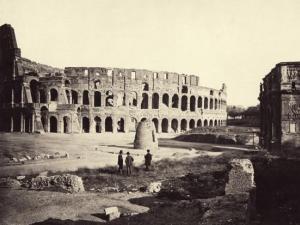
The Flavian Amphitheatre, better known as the Colosseum, is both a marvel of architecture and engineering, as well as a powerful symbol of Ancient Rome’s might and brutality.

The notoriety of this prince travelled far and wide until a well known shaikh in far away Shiraz in ancient Persia heard . “I must reform this prince before he squanders all his wealth on pomp and pleasure”, said the Shaikh to his followers. “I will travel to Samarqand and speak to him personally”. So saying, the Shaikh set off on foot for Samarqand with two of his companions.

To receive the latest topics on email directly as they are published

Comments
Send your comment