


Previous Article:
5 facts about the Colosseum
The Flavian Amphitheatre, better known as the Colosseum, is both a marvel of architecture and engineering, as well as a powerful symbol of Ancient Rome’s might and brutality.

5-
The Great Wall of China
Rather than a single unbroken barrier, China’s legendary Great Wall is actually a collection of stone, wood and earthen barricades that meander for thousands of miles from the Gobi Desert to the North Korean border. Construction on the fortifications began in the 3rd century B.C. under Emperor Qin Shi Huang, but the most famous sections were erected between the 14th and 17th centuries A.D. to defend the Ming Dynasty against the steppe nomads to the north. These portions stand up to 25 feet tall and were built using bricks and a mortar made from slaked lime and sticky rice. Gates were positioned along key strongpoints and trade routes, and watchtowers were used to send smoke and fire signals in the event of an attack. The completed wall was once the largest manmade object in the world, but despite its grandeur, it often proved ineffective as a defensive barrier. The Mongol leader Altan Khan famously bypassed the wall and raided Beijing in 1550, and the Manchus later broke through in 1644 and brought about the fall of the Ming Dynasty.
6-
The Walls of Constantinople
The Byzantine metropolis of Constantinople (modern day Istanbul) flourished for over a millennium thanks in part to the strength of its defensive walls. More than 14 miles of barricades surrounded the city, but the most famous were the Theodosian Walls, which blocked armies from advancing from the mainland. They included a moat, a 27-foot outer wall and a massive inner wall that was 40 feet tall and 15 feet thick. Troops stood guard on the ramparts at all times, ready to rain arrows and a type of ancient napalm called “Greek fire” on any enemy that dared attack them. The walls succeeded in turning back a host of would-be conquerors from the Arabs to Attila the Hun, but they finally met their match in 1453, when the Ottoman Empire besieged the city with a frightening new weapon—the cannon. After using their artillery to blast holes in the walls, the Turks poured through the breach and captured Constantinople, effectively toppling the Byzantine Empire.
7-
The Berlin Wall
Modern history’s most infamous wall was erected in 1961, when the Soviet-aligned East German government built a series of concrete partitions separating East and West Berlin. While Communist leaders claimed the barriers were designed to keep out fascists and other enemies of the state, their real function was to prevent East Germans from defecting to the West. More than 100 people were eventually killed while trying to escape through the maze of 12-foot walls, guard towers and electrified fences. Thousands more succeeded by scaling the wall, tunneling underneath it and even flying over it in ultra-light aircraft and homemade hot air balloons. Despite the Berlin Wall’s notorious reputation—Westerners dubbed it the “Wall of Shame”—it stood for more than 28 years before East German authorities finally opened it on November 9, 1989. The announcement sparked a wave of celebrations, and elated Berliners soon went to work demolishing the wall with jackhammers and chisels. East and West Germany were officially reunified less than a year later in October 1990.
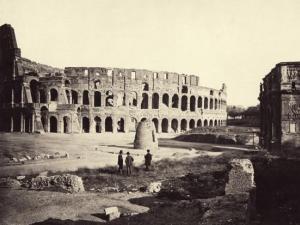
The Flavian Amphitheatre, better known as the Colosseum, is both a marvel of architecture and engineering, as well as a powerful symbol of Ancient Rome’s might and brutality.

The notoriety of this prince travelled far and wide until a well known shaikh in far away Shiraz in ancient Persia heard . “I must reform this prince before he squanders all his wealth on pomp and pleasure”, said the Shaikh to his followers. “I will travel to Samarqand and speak to him personally”. So saying, the Shaikh set off on foot for Samarqand with two of his companions.

To receive the latest topics on email directly as they are published

Comments
Send your comment