


Previous Article:
5 facts about the Colosseum
The Flavian Amphitheatre, better known as the Colosseum, is both a marvel of architecture and engineering, as well as a powerful symbol of Ancient Rome’s might and brutality.

It’s been said that good fences make good neighbors, and it seems that many of history’s most famous civilizations would agree. Dating back to the ancient world, governments and militaries have constructed sprawling defensive walls to keep hostile enemies at bay, define their national borders and even prevent their own citizens from fleeing—often with decidedly mixed results. From an ancient Sumerian bulwark to the Berlin Wall, here are seven of history’s most influential manmade barriers.
1- The Sumerians’ Amorite Wall
The world’s earliest known civilization was also one of the first to build a defensive wall. During the 21st century B.C., the ancient Sumerian rulers Shulgi and Shu-Sin constructed a massive fortified barrier to keep out the Amorites, a group of nomadic tribesmen who had been making incursions into Mesopotamia. This “Amorite Wall” is believed to have stretched for over a hundred miles between the Tigris and Euphrates Rivers in what is now Iraq. It was likely the first extensive rampart not built around a city, but it only succeeded in fending off the Sumerians’ enemies for a few years. Hostile invaders either penetrated the wall or simply walked around it, and by the reign of Shu-Sin’s successor, Ibbi-Sin, Sumer found itself under attack from both the Amorites and the neighboring Elamites. After the destruction of the city of Ur around 2000 B.C., Sumerian culture began to vanish from history.
2- The Long Walls of Athens
Athens was one of the most powerful cities in ancient Greece, but it was plagued by one major military weakness: it was situated some four miles from the sea. Around 461 B.C., the Athenians sought to correct this vulnerability by constructing a series of barriers to connect the city center to the vital harbors of Piraeus and Phalerum. When completed, these “Long Walls” created a siege-proof triangle of land that allowed the city to easily resupply itself from the sea, which was itself guarded by the mighty Athenian navy. The fortifications made Athens all but impregnable during the Peloponnesian War with Sparta and its allies, but the city was later forced to surrender after its navy was defeated at sea. The victorious Spartans are then said to have dismantled the hated Long Walls to the sound of celebratory music from flute girls. The barriers were later rebuilt, however, and continued to stand until 86 B.C., when they were destroyed by the Roman general Sulla.
3- The Great Wall of Gorgan
Also known as the “Red Snake” for its distinctive red-colored bricks, the “Great Wall of Gorgon” was a 121-mile rampart that extended from the southern coast of the Caspian Sea to the Elburz Mountains in what is now Iran. It was once thought to have been the work of Alexander the Great—it was even known as “Alexander’s Barrier”—but more recent research suggests it was built by the Sasanian Persians sometime around the 5th century A.D. When completed, it was one of the longest walls of antiquity and boasted more than 30 forts, a garrison of 30,000 troops and a network of canals that acted as both a water supply system and a defensive moat. Surprisingly little is known about the wall’s history, but most scholars believe the Persians used it to guard against the Hephthalite Huns and other enemies to the north.
4- Hadrian’s Wall
Around 122 A.D., the Emperor Hadrian ordered the construction of a stone barrier to protect Roman Britain from the Picts and the other “barbarian” tribes that inhabited northern England and Scotland. The result was “Hadrian’s Wall,” a 73-mile rampart that stretched from the Solway Firth on the western coast to the mouth of the River Tyne in the east. The wall was roughly 10 feet wide and 15 feet tall and was dotted with forts manned by frontier troops. Gates spaced one mile apart allowed the garrison to control movement in the region—the wall may have even been used to levy taxes—and defensive towers and ditches protected against raids from the north. Though briefly decommissioned in the 140s in favor of a more northerly barrier called the Antonine Wall, Hadrian’s Wall was later reoccupied and remained an imposing symbol of Roman power until their withdrawal from Britain in the early 5th century. 1,600 years of deterioration and looting for building materials have since reduced it to a fraction of its original size, but many portions still exist today and are among England’s most visited historical sites.
stay tuned.....................
source:
http://www.history.com/news/history-lists/7-famous-border-walls
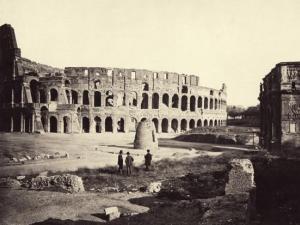
The Flavian Amphitheatre, better known as the Colosseum, is both a marvel of architecture and engineering, as well as a powerful symbol of Ancient Rome’s might and brutality.

The notoriety of this prince travelled far and wide until a well known shaikh in far away Shiraz in ancient Persia heard . “I must reform this prince before he squanders all his wealth on pomp and pleasure”, said the Shaikh to his followers. “I will travel to Samarqand and speak to him personally”. So saying, the Shaikh set off on foot for Samarqand with two of his companions.


To receive the latest topics on email directly as they are published

Comments
Send your comment