


Previous Article:
5 facts about the Colosseum
The Flavian Amphitheatre, better known as the Colosseum, is both a marvel of architecture and engineering, as well as a powerful symbol of Ancient Rome’s might and brutality.

In 1738, a British mariner named Robert Jenkins displayed a severed, decomposing ear before the members of Parliament. As part of a formal testimony, he claimed that a Spanish coastguard officer had sliced off his ear seven years earlier as punishment for smuggling. Spurred on by this stirring testimony, the British had soon declared war on the kingdom of Spain. Thus began the outlandish “War of Jenkins’ Ear.”
In truth, a clash between the British and Spanish had been in the works since the beginning of the 1700s, and Jenkins’ missing ear merely served as a convenient catalyst. The conflict had its roots in territorial disputes over the border between Spanish Florida and British Georgia, as well as the Spanish of boarding and harassing English vessels like the one captained by Jenkins. Fighting began in late 1739, and continued for two years in Florida and Georgia, with neither side emerging as the clear victor. The conflict later merged with the more expansive War of the Austrian Succession, which would not end until 1748.
Michigan and Ohio might now be known their longstanding football rivalry, but the two states once nearly went to war over a border dispute. The argument began in 1803, when the newly formed state of Ohio took ownership of a sliver of land containing the town of Toledo. Michigan territory later disputed Ohio’s claim on this “Toledo strip” in the 1830s, launching a heated debate that teetered on the edge of violence for several weeks.
In what became known as the Toledo War, both sides wrestled for political control of the territory, and both raised militias to defend against a possible invasion by the other. Desperate for Ohio’s valuable electoral votes, President Andrew Jackson finally intervened in 1835, and by 1836 a compromise was sealed. The détente saw Michigan territory relinquish its claim on the Toledo strip in exchange for statehood and a portion of the Upper Peninsula. Many viewed the decision as a grave injustice, but some residents of the disputed region were quick to accept their newfound status as Ohioans. When one woman learned of the decision, she is said to have quipped, “Thank the Lord, I never did like that Michigan weather anyway.”
In 1828, angry mobs destroyed large parts of Mexico City during a military coup. One of the victims of the rioting was an expatriate French pastry chef named Remontel, whose small café was ransacked by looters. Mexican officials ignored his complaints, so Remontel petitioned the French government for compensation. His request sat unnoticed until a decade later, when it came to the attention of King Louis-Philippe. The king was already furious that Mexico had failed to repay millions in loans, and now he demanded they pay 600,000 pesos to compensate the pastry chef for his losses. When the Mexicans balked at handing over such an astronomical sum, Louis-Philippe did the unexpected: He started a war.
In October 1838, a French fleet arrived in Mexico and blockaded the city of Veracruz. When the Mexicans still refused to pay up, the ships began shelling the San Juan de Ulua citadel. A few minor battles followed, and by December as many as 250 soldiers had been killed. The famous general Santa Anna even came out of retirement to lead the Mexican army against the French, and he lost a leg after he was wounded by grapeshot. Fighting finally ended in March 1839, when the British government helped broker a peace deal. As part of the treaty, the Mexicans were forced to shell out the 600,000 pesos—no doubt a large sum for a pastry shop at the time
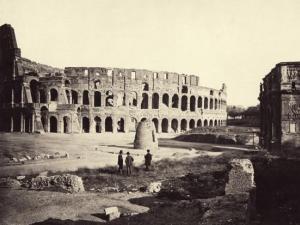
The Flavian Amphitheatre, better known as the Colosseum, is both a marvel of architecture and engineering, as well as a powerful symbol of Ancient Rome’s might and brutality.

The notoriety of this prince travelled far and wide until a well known shaikh in far away Shiraz in ancient Persia heard . “I must reform this prince before he squanders all his wealth on pomp and pleasure”, said the Shaikh to his followers. “I will travel to Samarqand and speak to him personally”. So saying, the Shaikh set off on foot for Samarqand with two of his companions.

To receive the latest topics on email directly as they are published

Comments
Send your comment