


Previous Article:
5 facts about the Colosseum
The Flavian Amphitheatre, better known as the Colosseum, is both a marvel of architecture and engineering, as well as a powerful symbol of Ancient Rome’s might and brutality.

Upon learning of the war, Detzner refused to surrender and retreated into the jungle with a small force of German officers and natives. Aided by Lutheran missionaries, who gave him food and supplies, he spent the next four years hiding out in the jungle—all the while continuing to fly the Imperial German flag. During this time he made a series of abortive attempts to cross into Dutch-occupied New Guinea, and in doing so became the first European to explore several parts of the island’s interior. After learning that the war had ended, Detzner finally emerged from the bush and surrendered to Australian forces in January 1919. He would later write a popular, partly fictionalized account of his time playing cat and mouse with enemy patrols.
Confederate General Joseph O. Shelby was so reluctant to surrender to Union forces that his unit earned the nickname “the Undefeated.” Shelby had spent the Civil War commanding a bushwhacking band of cavalry on a series of raids through Missouri and Arkansas. By the end of the conflict, his “Iron Brigade”—so named for its legendary grit—had caused millions of dollars in damages to Union supplies and property.
Announcing that they chose “exile over surrender,” Shelby and roughly 600 soldiers rode south to Mexico after the collapse of the Confederacy. Following a three-month journey through the desert, they offered their services to Maximilian I, an Austro-Hungarian who had been installed as emperor of Mexico in 1864. While the emperor balked at including rebel soldiers in his army, he allowed Shelby’s émigrés to help found the Carlota Colony, a small settlement of Confederate expats. The upstart community enjoyed a brief period of prosperity but eventually dissolved after Emperor Maximilian was overthrown. Having never surrendered to federal forces, Shelby and most of his comrades returned to the United States in 1867 and resumed civilian life.
The Siege of Baler came during the confusion of the Spanish-American War and the Philippine Revolution, in which Filipino freedom fighters revolted against Spanish colonial rule. The bizarre episode began in late June of 1898 when 800 Filipino insurgents descended upon the town of Baler, then occupied by just a small detachment of 57 Spanish infantrymen.
Faced with the Filipinos’ superior numbers, the Spaniards took refuge inside a stone church. Filipino forces promptly laid siege to the building, but the Spanish battalion stubbornly refused to lay down its arms. Although racked by disease and starvation, the troops would hold out in their makeshift fort until well after the official end of Spanish-Philippine hostilities in December 1898. During this time, the Filipinos repeatedly tried to convince the men that the war was over by sending them newspapers and other messages, but the Spanish dismissed these attempts as lies. The turning point in the standoff came when a Spanish officer noticed the wedding announcement of someone he knew in a newspaper sent by the Filipinos. Convinced of the document’s authenticity, the surviving Spaniards finally surrendered on June 2, 1899—nearly six months after their war had ended.
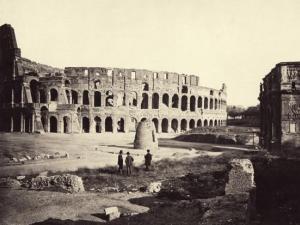
The Flavian Amphitheatre, better known as the Colosseum, is both a marvel of architecture and engineering, as well as a powerful symbol of Ancient Rome’s might and brutality.

The notoriety of this prince travelled far and wide until a well known shaikh in far away Shiraz in ancient Persia heard . “I must reform this prince before he squanders all his wealth on pomp and pleasure”, said the Shaikh to his followers. “I will travel to Samarqand and speak to him personally”. So saying, the Shaikh set off on foot for Samarqand with two of his companions.

To receive the latest topics on email directly as they are published

Comments
Send your comment