


Previous Article:
5 facts about the Colosseum
The Flavian Amphitheatre, better known as the Colosseum, is both a marvel of architecture and engineering, as well as a powerful symbol of Ancient Rome’s might and brutality.

Wars might have specific end dates, but that doesn’t mean the fighting always stopped when one side surrendered. History is filled with examples of soldiers who refused to capitulate even after their conflicts had come to an end. Some of these holdouts simply didn’t know war had ended, but others—including some of the six featured below—deliberately fought on even after peace had been declared.
Hiroo Onoda
Lieutenant Hiroo Onoda is the most famous of the so-called Japanese holdouts, a collection of Imperial Army stragglers who continued to hide out in the South Pacific for several years after World War II had ended. An intelligence officer, Onoda was dispatched to the Philippine island of Lubang in 1944 with orders not to surrender under any circumstances. When Allied forces captured Lubang in 1945, he and three other soldiers stole away to the island’s densely forested hills. They would continue to wage their own guerilla war for several years, eventually killing some 30 Filipinos during raids and shootouts.
One of Onoda’s companions surrendered to Philippine forces in 1950, and by 1972 police had killed the other two. But despite being left alone, Onoda refused to surrender and went on to evade dozens of Philippine army and police patrols. The Japanese government attempted to track him down with search parties and even dropped leaflets over the jungle telling him the war was over, but Onoda dismissed these attempts as trickery. He would not surrender until March 1974—nearly 30 years after the war had ended—when his former commanding officer traveled to the island and ordered him to stop fighting. Amazingly, the 51-year-old Onoda was not the last Japanese straggler to surrender. Teruo Nakamura, a Taiwan-born infantryman, held out on the Indonesian island of Morotai until November 1974.
Operation Haudegen
World War II’s Operation Haudegen was a German expedition to establish a meteorological station on the Norwegian archipelago of Svalbard. In September 1944, an 11-man crew journeyed to the blustery island of Spitsbergen to gather data on North Atlantic weather patterns. Their mission was top-secret—so top-secret, in fact, that after the collapse of the Nazi government the men were accidentally abandoned on the island. While the crew received a message in May 1945 telling them the war had ended, they subsequently lost all contact with German forces.
Marooned in the Arctic Circle with no sign of help, the men of Operation Haudegen spent the next four months battling subzero temperatures, high winds and the constant threat of polar bear attacks. Rescue finally came in September 1945, when the Norwegians overheard one of the expedition’s distress calls and dispatched a seal hunting boat to the island. In laying down their weapons, the weather technicians became the last armed German soldiers to capitulate during World War II. By all accounts, the surrender was a friendly affair—the Germans were reportedly so relieved to be rescued that they treated their captors to a celebratory feast.
James Waddell and CSS Shenandoah
The Confederate raiding vessel CSS Shenandoah had the dubious distinction of accidentally firing the final shots of the Civil War. Purchased from the British, the ship was commissioned in October 1864 and dispatched to “seek out and utterly destroy” Union commerce on the high seas. Under the command of Captain James Waddell, Shenandoah journeyed halfway around the world from Madeira to Australia before entering the Pacific Ocean. Sailing north to the Bering Sea, the ship spent the summer of 1865 wreaking havoc on the American whaling fleet. In total, Shenandoah seized six vessels, burned 32 others and captured over 1,000 prisoners.
Unbeknownst to Shenandoah’s crew, almost all of this raiding took place after the collapse of the Confederacy. It was August 2, 1865, before Captain Waddell learned the war had ended, and he quickly realized that his men would be tried as pirates if apprehended by the U.S. Navy. In order to avoid arrest, he elected to voyage around the tip of southern South America and sail for England. In the process, Shenandoah became the only Confederate vessel to complete a circumnavigation of the globe. Waddell and his raiders would finally turn themselves in to British authorities on November 6, 1865—almost a full seven months after Robert E. Lee’s surrender at Appomattox.
Staty tuned............
Source:
http://www.history.com/news/history-lists/6-soldiers-who-refused-to-surrender
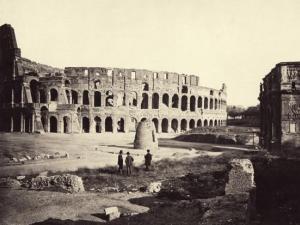
The Flavian Amphitheatre, better known as the Colosseum, is both a marvel of architecture and engineering, as well as a powerful symbol of Ancient Rome’s might and brutality.

The notoriety of this prince travelled far and wide until a well known shaikh in far away Shiraz in ancient Persia heard . “I must reform this prince before he squanders all his wealth on pomp and pleasure”, said the Shaikh to his followers. “I will travel to Samarqand and speak to him personally”. So saying, the Shaikh set off on foot for Samarqand with two of his companions.

To receive the latest topics on email directly as they are published

Comments
Send your comment