


Previous Article:
5 facts about the Colosseum
The Flavian Amphitheatre, better known as the Colosseum, is both a marvel of architecture and engineering, as well as a powerful symbol of Ancient Rome’s might and brutality.

Rebel generals plagued the Roman Empire for much of its history, but few were as bold or as successful as Carausius. A skilled naval commander, he first rose to prominence around 286 A.D., when he was tasked with protecting the coastlines of Gaul from Frankish and Saxon pirates. While he kept the marauders at bay, Carausius was also known to pilfer their captured booty for himself, and his corruption eventually earned him a death sentence from the Roman Emperor Maximian. Rather than face the sword, the swashbuckling general marshaled his forces, withdrew to modern-day England and declared himself emperor of Britain.
After the Romans failed in an ill-planned attempt to retake the island, Carausius negotiated a flimsy peace deal that saw him recognized as the legitimate sovereign of Britain. Over the next few years, he built several coastal forts, issued his own coinage, and even conducted military operations in Gaul. He had plans to expand his empire deeper into the mainland, but his ambition was cut short in 293 A.D., when his finance minister Allectus engineered his assassination. Carausius’ unlikely empire would later collapse in 296 A.D., after Roman forces killed Allectus and reclaimed Britain.
Following a pair of abortive attempts to sail for Cuba, Lopez finally arrived on the island in May 1850 and occupied the coastal town of Cardenas. He had hoped his forces would be greeted as liberators, but his mercenary army came under immediate attack, and he only narrowly escaped to Key West with his life. Undeterred, Lopez launched a fourth invasion of Cuba in August 1851, this time with a band of 453 men-at-arms. He once again succeeded in landing on the island, but within two days his forces were routed by Spanish troops. Some 170 of the doomed army were captured, while another 50—including Lopez—were executed.
Few would have questioned Ungern’s bravery, but the general turned heads with his bizarre and often tyrannical behavior. A devout Buddhist who surrounded himself with soothsayers and fortune tellers, he was also a rabid anti-Semite, and allowed his men to brutally rape and murder Urga’s Jewish and Chinese populations. Ungern believed his invasion would launch the second coming of Genghis Khan’s Mongol Empire, and he dished out medieval punishments to all who resisted his rule. These depredations would last until mid-1921, when Ungern fell into Soviet hands during a failed invasion of Russia. After a brief trial, the infamous “Mad Baron” was executed by firing squad.
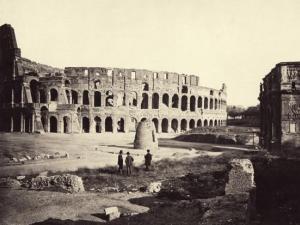
The Flavian Amphitheatre, better known as the Colosseum, is both a marvel of architecture and engineering, as well as a powerful symbol of Ancient Rome’s might and brutality.

The notoriety of this prince travelled far and wide until a well known shaikh in far away Shiraz in ancient Persia heard . “I must reform this prince before he squanders all his wealth on pomp and pleasure”, said the Shaikh to his followers. “I will travel to Samarqand and speak to him personally”. So saying, the Shaikh set off on foot for Samarqand with two of his companions.

To receive the latest topics on email directly as they are published

Comments
Send your comment