


Previous Article:
5 facts about the Colosseum
The Flavian Amphitheatre, better known as the Colosseum, is both a marvel of architecture and engineering, as well as a powerful symbol of Ancient Rome’s might and brutality.

Here, writing for History Extra, Dr Knox reveals 10 things you (probably) didn’t know about Scottish history.
1) There is no genetically pure or original Scot
There is no common ancestral or genetic heritage that links the peoples of Scotland. The country was a patchwork quilt of various peoples grouped together in tribes who certainly never thought of themselves as Scottish. They owed allegiance only to their kith and kin, but in the campaigns against Roman imperialism they built federations that laid the basis of kingdoms.
Ancient Scotland was made up of four separate groups: Angles, Britons, Picts and Gaels (or Scoti), who each spoke a different language. Latin became the common language of the whole country only after the Christianisation of Scotland in the 6th century AD.
2) Kenneth McAlpin (810–858) was not, as is popularly claimed, the first king of Scotland
What McAlpin did was in 842 take advantage of the Picts who had been severely weakened militarily by punitive Viking raids, and unite the kingdom of the Gaels with that of Pictavia. But while he ruled over the whole of Scotland north of the river Forth, large parts of the country were still in the hands of the Vikings in the north and Islands, and in the south the Anglo-Saxons ruled.
But McAlpin was referred to as king of the Picts – a title conferred on him at his coronation on Moot Hill at Scone, Perthshire, in 843 AD. It was not until the reign of Donald II (889–900) that the monarch became known as the ri Alban (king of Alba).
McAlpin’s achievement was to create a long-lasting dynasty that gradually extended the territorial borders of Scotland both north and south, but it was not until 1469 that what we know as Scotland today was established.
3) William the Lion (1165–1214) was not, as his name suggests, a strong and fearless king
Although he was on the throne longer than any other Scottish monarch, with the exception of James VI and I, never was a king so humiliated as William. Captured by the English, he gained his release only by signing the treaty of Falaise in December 1174. By the terms of the treaty he only ruled Scotland with the permission of the English crown. The treaty lasted 15 years and was repealed when the Scots agreed to pay a hefty sum of money.
But the humiliation didn’t end there, as in 1209 he was again forced to pay homage to John I. Therefore, his contribution was to heraldry rather than statecraft; he put the lion rampant on the Scottish flag.
4) William Wallace was not the only patriotic leader of the resistance to the English occupation of Scotland
Equally important was Andrew de Moray. In the winter of 1297 he escaped from an English prison and immediately began to organise the resistance in the north of Scotland against English rule. By the end of the year his forces were in control of Morayshire and had taken possession of the principal castles of the region, including Elgin and Inverness.
De Moray’s success in the north was matched by Wallace’s in the south. After the defeat of the English at Stirling Bridge in September 1297 de Moray was mentioned along with Wallace in letters as ‘the leaders of the army and of the realm of Scotland’. However, victory came at a price: de Moray was wounded at Stirling and died two months later.
Some historians have argued that too much of the credit for this has gone to Wallace, and that the successful campaign of 1297 owed more to de Moray than it did to his more celebrated contemporary.
5) The Scots never won a battle when they were favourites
At Flodden Field in 1513 the largest Scottish army ever assembled to invade England was annihilated by a much smaller English army that inflicted 10,000 causalities on the Scots in just two hours. Again at Solway Moss in 1542 a Scottish force of 15,000 men was defeated by 3,000 English soldiers – and 1,200 Scots were taken prisoner. The defeat was so demoralising that James V took to his bed and died of shame.
When the Scots were the underdogs they did best. At the battle of Stirling Bridge in 1297 a vastly outnumbered Scottish army inflicted a devastating defeat on the English. Just 17 years later at Bannockburn an English army three times that of the Scots was decimated by the forces of Robert the Bruce. In 1745 the rag tag army of the Young Pretender, Charles Edward Stuart, walked through Scotland and in to England as far as Derby where it inexplicably turned face and marched home with London within its grasp.
stay tuned.....................
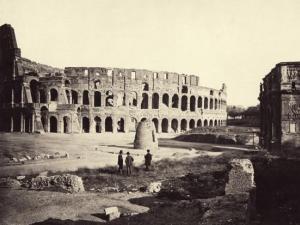
The Flavian Amphitheatre, better known as the Colosseum, is both a marvel of architecture and engineering, as well as a powerful symbol of Ancient Rome’s might and brutality.

The notoriety of this prince travelled far and wide until a well known shaikh in far away Shiraz in ancient Persia heard . “I must reform this prince before he squanders all his wealth on pomp and pleasure”, said the Shaikh to his followers. “I will travel to Samarqand and speak to him personally”. So saying, the Shaikh set off on foot for Samarqand with two of his companions.

To receive the latest topics on email directly as they are published

Comments
Send your comment